
Building a new home on Long Island starts long before the foundation is poured. Here's what land clearing actually involves — and what to expect before construction begins.

You’ve got the lot. Maybe you’ve even got a builder lined up. But between where you are right now and the day that foundation gets poured, there’s an entire phase of work that most people don’t fully anticipate — and when it’s mishandled, it can delay your project by weeks, cost you thousands in surprises, or create drainage problems you won’t discover until after move-in.
Land clearing for new home construction on Long Island isn’t just cutting down trees. It’s a sequenced process involving permits, site assessment, selective removal, grading, and erosion control. We’ll walk you through all of it — plainly, in the order it actually happens — so you can move forward with your eyes open.
The phrase “land clearing ” gets used loosely, but for new home construction, it refers to a specific scope of work: removing everything from the surface and near-subsurface of your lot that would interfere with building — trees, stumps, brush, root systems, and debris — and then shaping the land so your builder has a stable, properly drained surface to work from.
On Long Island, that scope almost always includes more than people expect. Mature tree canopy, buried root systems, and the island’s glacial geology mean that what looks like a straightforward wooded lot can involve significant excavation before the site is truly ready. The process isn’t fast, and it isn’t simple — but when it’s done right, everything that follows goes smoother.
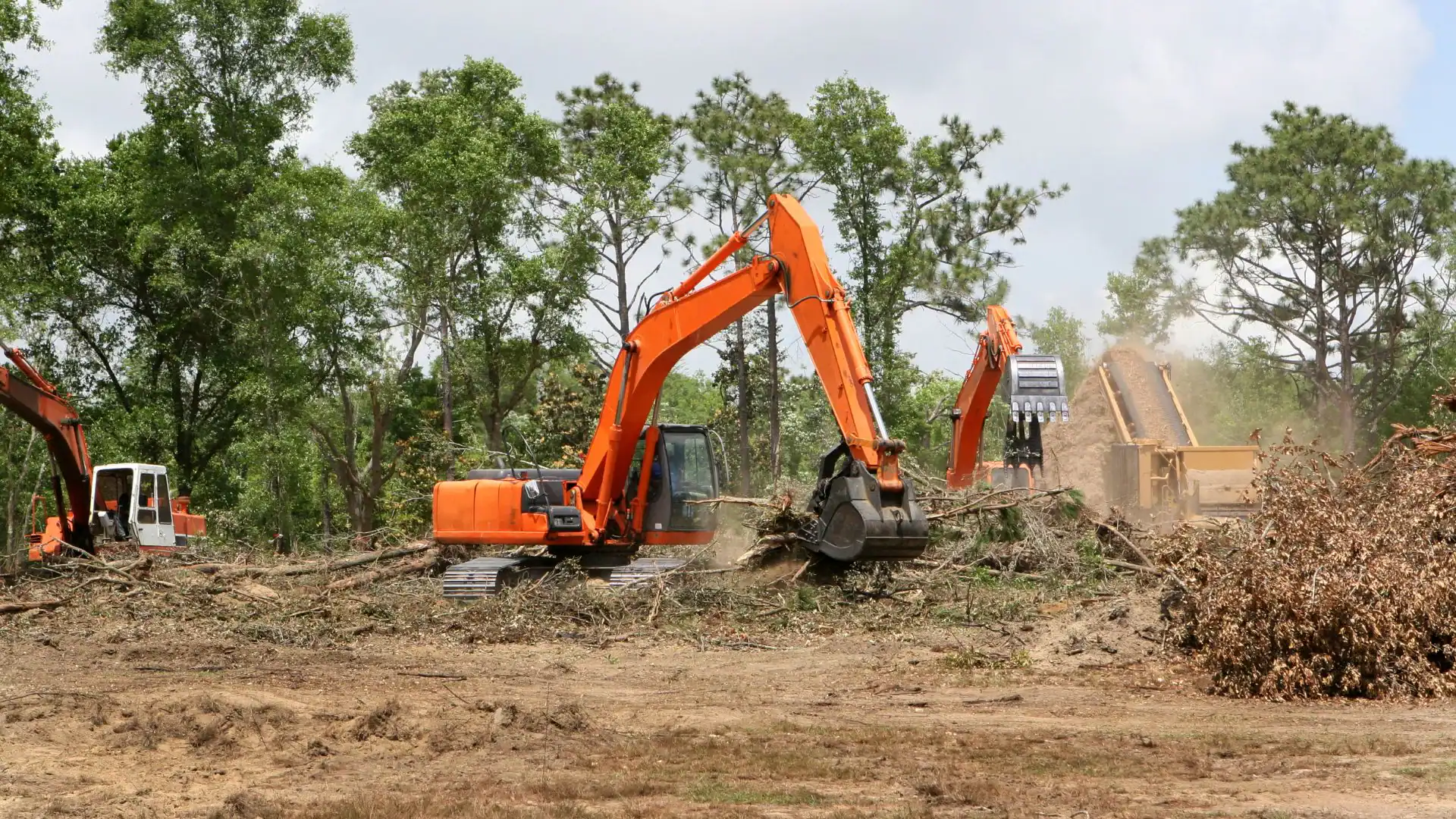
The process starts before any equipment arrives on your property. The first step is a site walk — a real one, not a five-minute drive-by. We walk the lot with you, identify the trees and features you want preserved, mark the boundaries, and assess what’s actually on the ground. On North Shore properties in towns like Oyster Bay, Cold Spring Harbor, or Huntington, that often means mature oaks and beeches that took a century to grow. If you want them saved, that conversation happens here, before the chainsaws come out.
Next comes permitting. In Nassau County, you need a clearing permit the moment you’re removing more than 50 square feet of vegetation. In Suffolk County, that threshold is 100 square feet. Individual towns — Brookhaven, Smithtown, Islip, Southampton — often have stricter local ordinances on top of the county requirements. The permit process can take four to twelve weeks during peak spring season, which is exactly why homeowners who wait until they’re “ready to start” end up pushing their entire construction timeline back by a quarter. We handle the permit applications and coordinate with the relevant building departments so that piece doesn’t fall on you.
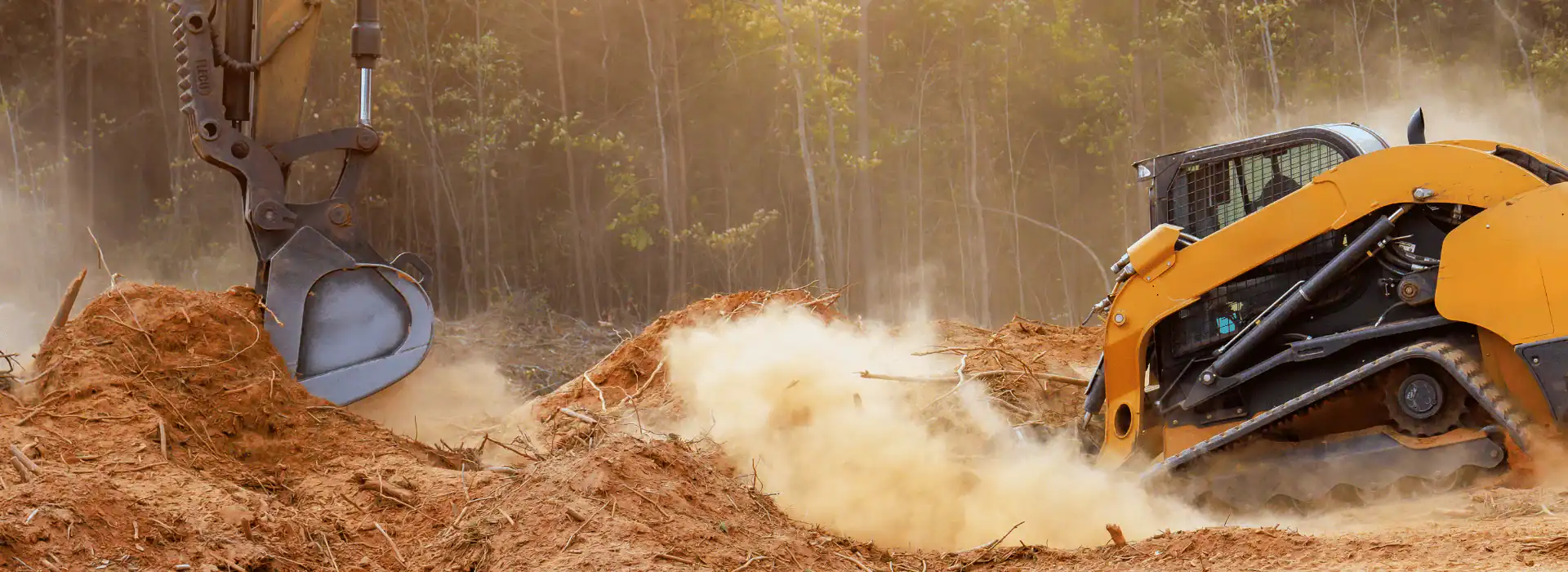
Once permits are in hand and utilities are located — and yes, we call 811 before any digging, every time, no exceptions — the clearing work begins. Trees are removed in the order and manner that protects surrounding vegetation and avoids soil compaction in the future building footprint. This matters more than most people realize. Heavy equipment staging in the wrong area can compact the soil beneath where your foundation will sit, creating long-term structural issues that don’t show up until years later.
After the trees are down, stumps come out. Not ground flush to the surface — removed to below-grade depth, with root systems excavated from the building footprint. A stump ground to grade looks clean, but the decaying root mass left underground will cause soil settlement beneath your foundation over time. For a new build, that’s not an acceptable outcome.
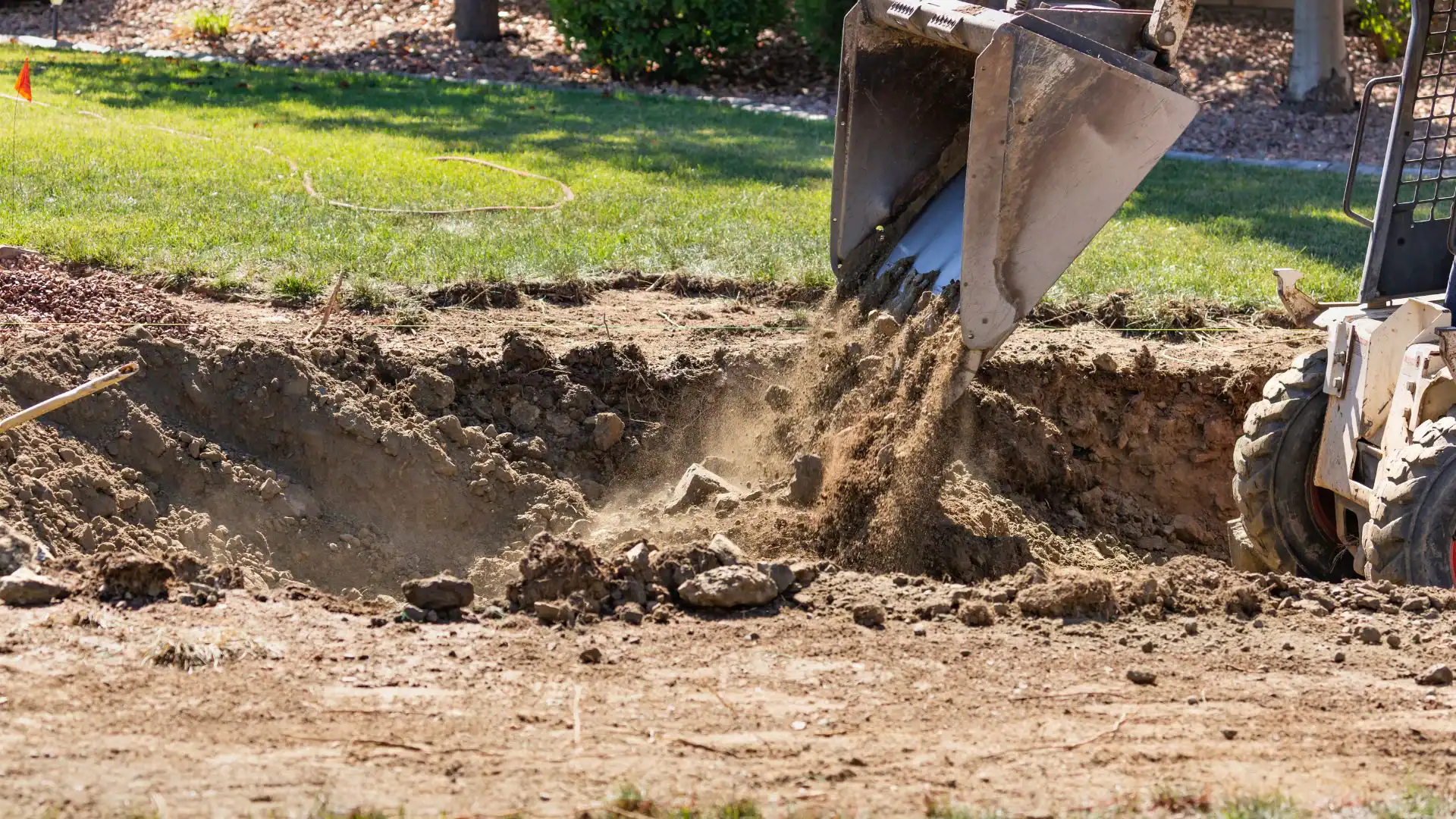
The final phase before site handoff is rough grading. This is where the land gets shaped to direct water away from the building pad. Positive drainage — water moving away from the foundation, not toward it — is one of the most important outcomes of a well-executed site prep. Improper grading is one of the leading causes of foundation problems and basement flooding on Long Island, and it’s almost entirely preventable when grading is done thoughtfully before the builder arrives. Erosion controls like silt fencing go in last, particularly on lots near DEC-regulated wetland buffers, which are common across both Nassau and Suffolk Counties given Long Island’s extensive coastal and freshwater wetland systems.
Long Island’s terrain has a few characteristics that contractors from outside the region consistently underestimate. The island was formed by glacial retreat, which left behind a landscape of sandy loam soils, clay lenses, and buried glacial boulders — called erratics — that can appear without warning during excavation. On a wooded lot in Smithtown or Northport, hitting a buried boulder the size of a small car isn’t unusual. It doesn’t make the job impossible, but it affects timeline and cost, and a contractor who hasn’t worked extensively on Long Island may not have the equipment or experience to handle it efficiently.
High water tables are another factor, particularly on South Shore lots near Great South Bay, or in low-lying areas around Babylon, Islip, and Massapequa. When the water table is close to the surface, grading decisions become more consequential — drainage has to be designed carefully, and certain phases of excavation may need to be timed around seasonal conditions.
Then there are the underground surprises specific to Long Island’s older housing stock. Buried cesspools are extremely common on properties that were developed in the mid-twentieth century and later connected to municipal sewer systems. They need to be located and properly decommissioned before clearing and grading begins. Old oil tanks, buried foundations from demolished outbuildings, and legacy utility lines are also part of the picture on many Long Island lots. This is why a thorough site assessment before any work begins isn’t optional — it’s how you avoid a costly discovery mid-project.
For lots near tidal or freshwater wetlands, New York State’s Article 25 and Article 24 regulations under the Environmental Conservation Law may require a DEC permit before any regulated activity can occur within the buffer zone. These buffer zones extend 100 to 300 feet from wetland boundaries in many cases, and a significant number of Long Island residential lots fall within them. Knowing this before you hire a contractor — and working with one who understands the DEC permit process — can be the difference between a project that moves forward and one that gets stopped before it starts.
Want live answers?
Connect with a Gold Coast Landworks expert for fast, friendly support.
There’s a wide range of contractors on Long Island who will tell you they do land clearing. Some are primarily tree services that take on clearing as a side job. Some are landscaping companies who handle light brush removal but aren’t equipped for full site preparation. And some are full-service site prep contractors who can take a lot from wooded and overgrown to construction-ready without you needing to coordinate multiple vendors.
The difference matters enormously when you’re preparing for a new home build. Knowing what to look for — and what questions to ask — will save you from the most common contractor problems in this category.
The first thing to verify is licensing. Nassau County and Suffolk County each require a Home Improvement Contractor License for work performed in their respective jurisdictions — these are county-level licenses, separate from any state-level registration. A contractor who is licensed in one county but not the other can’t legally perform work across both. Ask to see license numbers and verify them if you have any doubt.
Insurance is non-negotiable. General liability coverage of at least one million dollars per occurrence and workers’ compensation for all employees are the baseline. If a contractor can’t produce certificates of insurance on request, that’s a clear signal to keep looking. On Long Island, where properties are densely situated and neighboring lots are often close, the liability exposure from an uninsured crew working near your home — or your neighbor’s — is real.
Beyond licensing and insurance, pay attention to scope. A contractor who handles clearing, tree removal, stump extraction, rough grading, and erosion control under one contract eliminates a coordination burden that can genuinely derail a construction timeline. When you’re managing a new build, the last thing you need is to be the go-between for three separate vendors who’ve never worked together.
Ask specifically about permits. A contractor who says “you’ll need to handle the permits yourself” is passing a complicated, time-sensitive responsibility onto someone who doesn’t know the local system. Permit timelines in Nassau and Suffolk Counties during peak spring season can stretch to twelve weeks. A contractor who knows the local building departments, understands the specific thresholds for each municipality, and handles the applications on your behalf is worth more than a slightly lower bid from someone who doesn’t.
Finally, ask what a clean site handoff looks like to us. The answer should include below-grade stump removal, root extraction from the building footprint, rough grading with positive drainage, debris removal or on-site mulching, and erosion controls in place. If the answer is vague, that’s useful information.
One of the most common questions we hear is: do I really need a permit just to clear trees on my own property? The short answer is yes, in almost every case on Long Island. Nassau County requires a clearing permit for removal of more than 50 square feet of vegetation. Suffolk County’s threshold is 100 square feet. Towns like East Hampton, Southampton, and Huntington have local tree preservation ordinances that are stricter still. Starting work without the right permits can result in a stop-work order, fines, and in some cases a requirement to restore the cleared vegetation — which is an expensive outcome to avoid by simply pulling the permits first.
Another question that comes up often is: how long will this take? For a standard residential lot on Long Island, the clearing work itself typically runs two to five days. The permit process is what extends the overall timeline — four to twelve weeks depending on the municipality and the time of year. This is why engaging a contractor early matters. Homeowners who call in March hoping to break ground in April are often disappointed to learn that the permit timeline alone pushes their start date to June. If you’re planning a new build, the site prep conversation should happen months before you think you need it.
People also ask about cost, and it’s a fair question because pricing in this category is genuinely opaque. On Long Island, residential land clearing starts at roughly two thousand dollars for a small, lightly vegetated lot and scales significantly from there based on tree density, lot size, stump count, and grading requirements. Stump removal adds seventy-five to four hundred dollars per stump depending on size. Grading adds more. A detailed, written estimate that breaks down each component is the only way to compare quotes accurately — and any contractor who won’t provide one is telling you something.
Finally, homeowners often ask whether they can save specific trees during the clearing process. Yes — and this is exactly the kind of conversation that should happen during the initial site walk. Selective clearing is standard practice, and on North Shore properties where mature specimen trees represent real aesthetic and financial value, it’s often a priority. The key is communicating clearly before any work begins, marking the trees to be preserved, and working with a contractor who treats that instruction as binding.
Land clearing is the first real step in building a new home on Long Island — and it sets the conditions for everything that follows. When it’s done right, your builder arrives to a clean, graded, permit-compliant site and construction moves forward on schedule. When it’s done wrong, the problems tend to compound: drainage issues, foundation concerns, permit violations, and delays that ripple through the entire project.
The process isn’t complicated once you understand it, but it does require the right contractor — one who knows Nassau and Suffolk County regulations, handles the permits, understands Long Island’s terrain, and delivers a finished site your builder can actually use.
If you’re planning a new home build and want to understand what your specific lot will require, we’re a good place to start that conversation. A site walk costs nothing and tells you a lot.
Summary:


Article details: