Hiring an excavation company in Suffolk County isn't as simple as picking the lowest quote. Here's what you need to know before the first shovel hits the ground.

Most people searching for an excavation company have never hired one before. That’s not a criticism; it’s just the reality. Excavation isn’t something you need every year, which means when you do need it, you’re starting from scratch. You’ve got a problem: a yard that floods, a lot that needs clearing, a project that requires real digging; a handful of contractor names; and no clear way to tell who is worth trusting.
We built this page to change that. We will walk through the questions that matter most: what to ask, what the answers should sound like, and what it means for your property here in Suffolk County, NY.
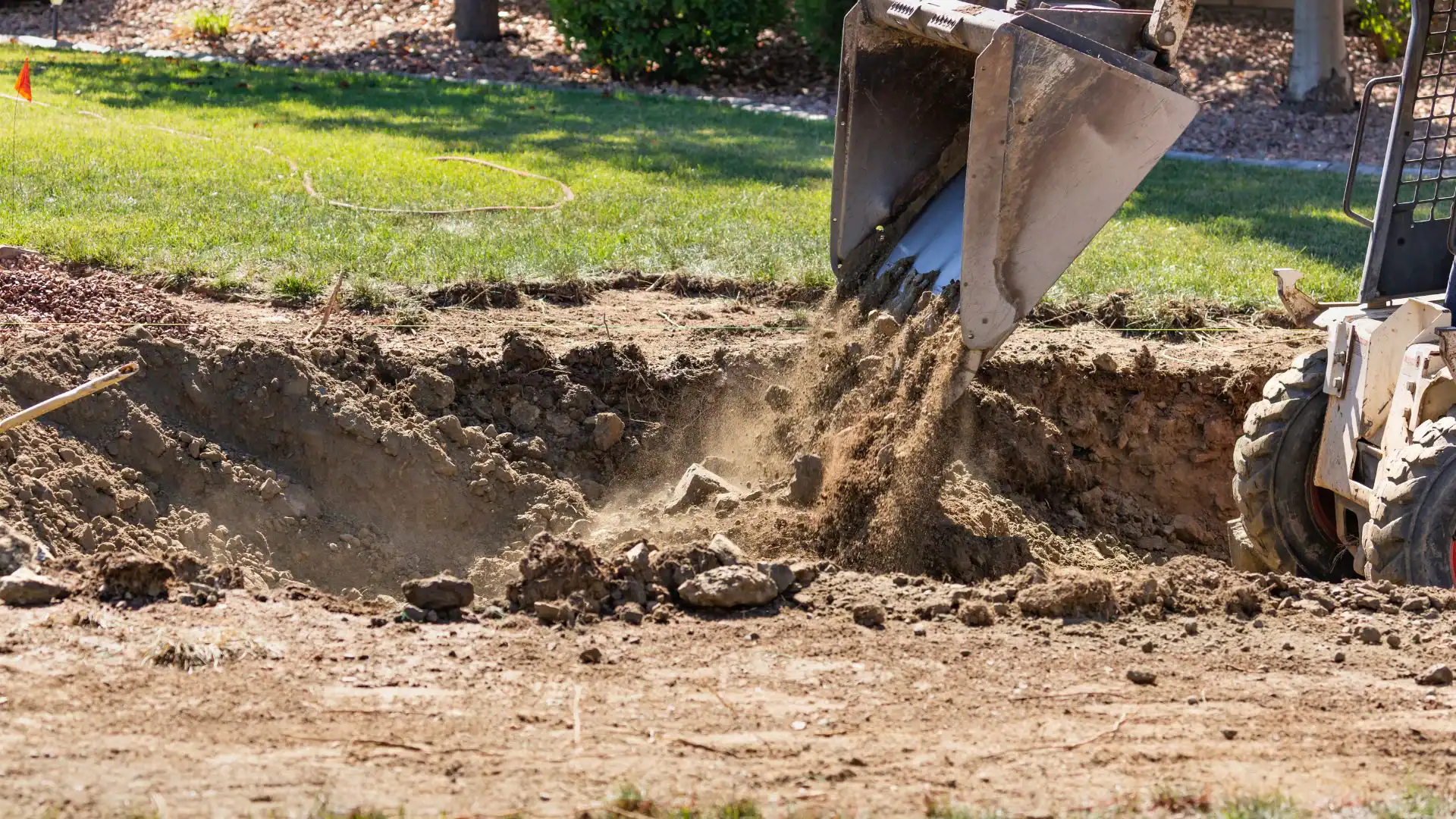
Excavation is more than digging a hole. A qualified excavation company handles site preparation, grading, drainage work, land clearing, utility trenching, and foundation work, often as part of the same project. The goal isn’t just to move dirt. It’s to leave the site in a condition that supports everything that comes next, in cases where that is a new structure, a drainage system, or a restored lawn. In Suffolk County, NY, that work gets more complex fast. Long Island’s glacially deposited soils vary significantly from one town to the next. The sandy, fast-draining soils common near the South Shore behave very differently from the heavier, clay-bearing soils you will find in parts of Huntington or Smithtown. A contractor who understands that variability and adjusts their approach accordingly is worth a lot more than one who treats every job the same.

This is the right place to start, and the fact that you are asking it puts you ahead of most people. Here are the questions that separate a professional operation from one you will regret hiring.
Do you call 811 before every job?
This isn’t optional; it’s the law. New York State requires contractors to contact 811 at least two business days before any digging begins so that underground utilities can be marked. LIPA and National Grid both have infrastructure buried throughout Suffolk County, NY, and a contractor who skips this step is putting your property and your safety at risk. If a contractor hesitates or brushes past this question, that tells you something important.
Are you licensed and insured in Suffolk County?
New York doesn’t issue a statewide contractor license, so the relevant credential here is a Suffolk County Home Improvement Contractor (HIC) license issued through the Suffolk County Department of Consumer Affairs. You can verify this yourself through their database. Beyond licensing, ask for a Certificate of Insurance showing general liability coverage (the industry standard is $1,000,000 per occurrence) and a workers’ compensation certificate. Without workers’ comp, you could be held liable if someone gets hurt on your property.
Will you come to the site before giving me a number?
Any contractor quoting a firm price over the phone without seeing the property is guessing. Soil conditions, site access, drainage patterns, proximity to wetlands: all of these affect scope and cost, and none of them can be assessed remotely. An on-site evaluation before the quote isn’t a courtesy; it’s how professionals work.
What happens if you find something unexpected underground?
In Suffolk County, unexpected conditions are more common than people expect: old pipes, buried debris, high water tables, even bedrock in certain areas. Ask how the contractor handles scope changes, and make sure the answer involves a written change-order process, not a verbal agreement on the spot.
Licensing and insurance are the floor, not the ceiling. Once you have confirmed those, the next layer is experience that’s relevant to your specific project and your specific location.
Ask to see photos of completed projects in Suffolk County, NY.
Before-and-after documentation of drainage work, land clearing, or site grading done in this county tells you the contractor knows what they are working with here. Long Island’s coastal geography, its high water tables near the Sound and the Bay, and its patchwork of town-level permit requirements all create conditions that out-of-area contractors routinely underestimate.
Ask about soil compaction.
It’s one of the most overlooked steps in excavation work, and one of the most consequential. When soil is disturbed and then backfilled without proper compaction, you get settling: driveways that crack, patios that sink, drainage systems that shift out of their designed slope. It’s invisible work that determines if the job holds up for two decades or starts failing in two years. A contractor who brings it up without being prompted is signaling that they care about outcomes, not just completion.
Ask how they handle permits.
Suffolk County’s 10 towns each run their own building departments, and permit requirements vary. Projects near tidal wetlands or coastal areas may also require DEC review. A contractor who has done consistent work across Brookhaven, Islip, Babylon, and Huntington will know how to navigate that process. One who is vague about permitting is either inexperienced in this county or hoping you won’t push the issue.
Finally, ask about site restoration.
What does the property look like when they leave? Disturbed soil regraded, debris removed, the site ready for the next phase of work: that’s the professional standard. A contractor who leaves a mess after the job is one who cut corners during it.
Want live answers?
Connect with a Gold Coast Landworks expert for fast, friendly support.
Excavation rarely exists in isolation. Most projects in Suffolk County, NY involve at least one adjacent service (drainage work, land clearing, basement waterproofing , or landscaping restoration) and the way those services connect matters as much as how each one is performed individually.
When one company handles the full sequence, you avoid the coordination problems that come with managing multiple contractors: scheduling conflicts, disputes about whose work caused a subsequent issue, and the general friction of having to explain the same project to three different crews. More importantly, a contractor who understands how excavation affects drainage, and how drainage affects a foundation, will make better decisions at every stage.

This is one of the most common questions we hear, and the honest answer is: it depends on what is causing the problem. That’s not a dodge; it’s the reason a proper diagnosis matters before any work begins.
Surface water and groundwater are different problems. If your yard floods after heavy rain because water has nowhere to go, that’s typically a surface drainage issue. Regrading the property to redirect water away from structures, or installing a French drain to intercept and redirect subsurface flow, are common solutions. A French drain (perforated pipe wrapped in filter fabric, buried in a gravel trench) works by capturing water before it can pool or penetrate a foundation.
It’s a straightforward solution when installed correctly, but “correctly” in Suffolk County, NY means accounting for your soil type, the depth of your water table, and where the water will ultimately discharge. These variables shift across the county’s different zones and proximity to water bodies.
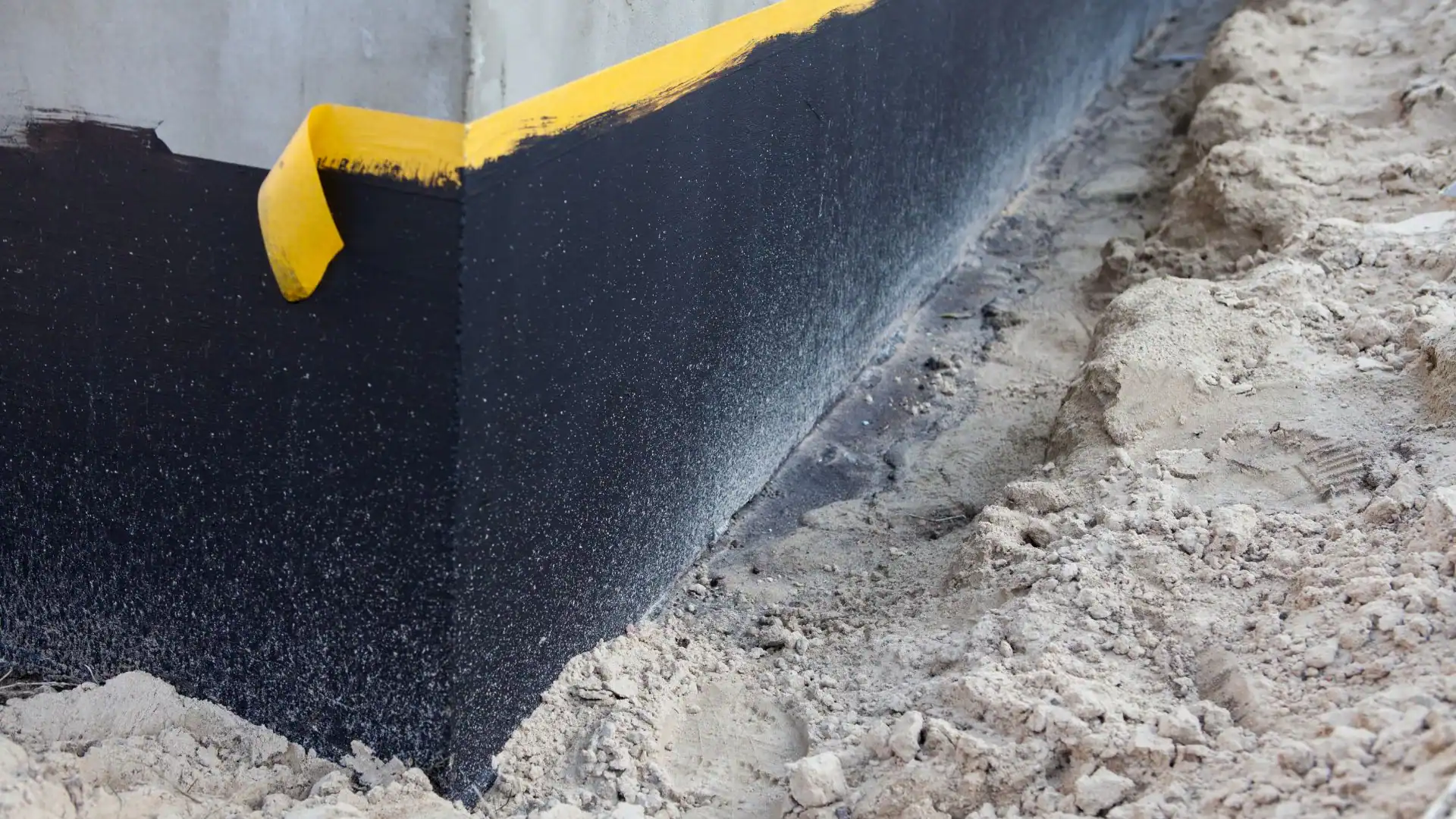
Basement waterproofing addresses a different problem: water that’s already reaching your foundation. In some cases, improving exterior drainage eliminates the basement moisture issue entirely. In others (particularly in older homes near the Great South Bay or in low-lying areas of Islip, Babylon, or Brookhaven), the water table is simply too close to the surface for drainage alone to solve the problem. Interior drainage systems and waterproof membranes become part of the answer.
The mistake homeowners make is treating these as either/or choices based on what sounds familiar, rather than what their property needs. The right contractor will assess the source of the water problem before recommending a solution, not recommend the solution they happen to specialize in most often.
Timing matters more than most people realize, and in Suffolk County, NY, the calendar has some specific rhythms worth understanding.
Spring is the busiest season for drainage work and site preparation. The combination of snowmelt and spring rains reveals drainage problems that were invisible all winter, and homeowners move quickly once they see standing water in their yard or a wet basement floor.
Quality contractors in this county book weeks, sometimes months, in advance during April and May. If you wait until the problem is actively happening, you may not be able to get the contractor you want when you need them most.
Summer is the primary construction season. Land clearing, foundation excavation, and large site prep projects are concentrated between June and August when the ground is workable and daylight hours are long. If you are planning a construction project that requires site clearing or grading, starting conversations with contractors in late winter gives you options. Waiting until June means competing with everyone else who had the same idea.
Fall brings a second wave of drainage and waterproofing inquiries as homeowners prepare for winter. It’s also when nor’easters start becoming a factor, and a significant storm can create immediate demand for emergency land clearing and drainage repair across the county. After a major storm event, contractor availability tightens quickly.
The practical takeaway: if you know you have a drainage problem, a lot that needs clearing, or a project coming up in the spring or summer, the best time to schedule an assessment is before the rush, not during it. The cost of the work doesn’t change based on when you call, but your options definitely do.
The right excavation company isn’t necessarily the one with the biggest equipment or the longest list of services. It’s the one that shows up to your property before quoting, asks the right questions, pulls the right permits, calls 811 before touching the ground, and leaves the site better than they found it. Those aren’t extraordinary standards; they’re what professional work looks like.
Suffolk County, NY’s soil conditions, coastal water tables, and town-by-town permitting landscape make local experience genuinely valuable here. A contractor who has done consistent work across this county understands the variables that affect your project in ways that a generalist or out-of-area operator simply won’t.
If you are ready to talk through what your property needs, in cases where that is excavation, drainage, land clearing, waterproofing, or some combination, we are here to have that conversation. No pressure, no guesswork. Just a straightforward assessment from a team that knows this county.
Summary:

Article details: