
Suffolk County's soil, storms, and high water table create drainage problems most generic advice cannot fix. Here is what works.

After a heavy rain, most Suffolk County homeowners assume a soggy lawn is just part of life out here. It is not. Standing water that lingers for days is a symptom, and what it is pointing to is usually more serious than wet grass. We have worked on enough Long Island properties to know that the water you can see is rarely the biggest problem. It is the water you cannot see, quietly building pressure against your foundation or saturating the soil beneath your slab, that causes the real damage. Here are five things worth understanding before that problem gets worse.
Most drainage advice you will find online was written for generic suburban conditions, flat lots, moderate rainfall, predictable soil. Suffolk County is none of those things. The county’s soil shifts dramatically depending on where you live. Inland areas like Smithtown, Hauppauge, and Brentwood tend toward dense clay that holds water like a bowl. Closer to the South Shore, Babylon, Islip, Patchogue, the soil is sandier, which sounds like it would drain better, but it saturates quickly during sustained rain and offers little resistance once the water table rises.
That water table is the other piece of the puzzle. Long Island’s groundwater sits close to the surface across most of Suffolk County, and it rises with every significant storm. When August 2024 dropped 9.4 inches of rain on western Suffolk County in a single day, it was not just a freak event, it was a preview of what climate patterns are increasingly delivering to this region. The Eastern U.S. is seeing roughly 70% more heavy downpour events annually than historical averages. Generic drainage solutions were not designed for that reality.
When water pools in your yard after a storm and does not move for two or three days, most homeowners think: lawn problem. The reality is more complicated. That standing water is the visible end of a chain reaction that starts underground. Saturated soil compacts over time, killing grass roots and creating conditions where moss takes over and pests thrive. But the more urgent issue is what is happening at your foundation line.
Water that consistently pools near a home places constant hydrostatic pressure on foundation walls. This is not a slow, harmless process, it is cumulative stress that widens existing cracks, weakens structural materials, and can shift the soil beneath the slab. By the time you notice water in your basement, that pressure has often been building for years.
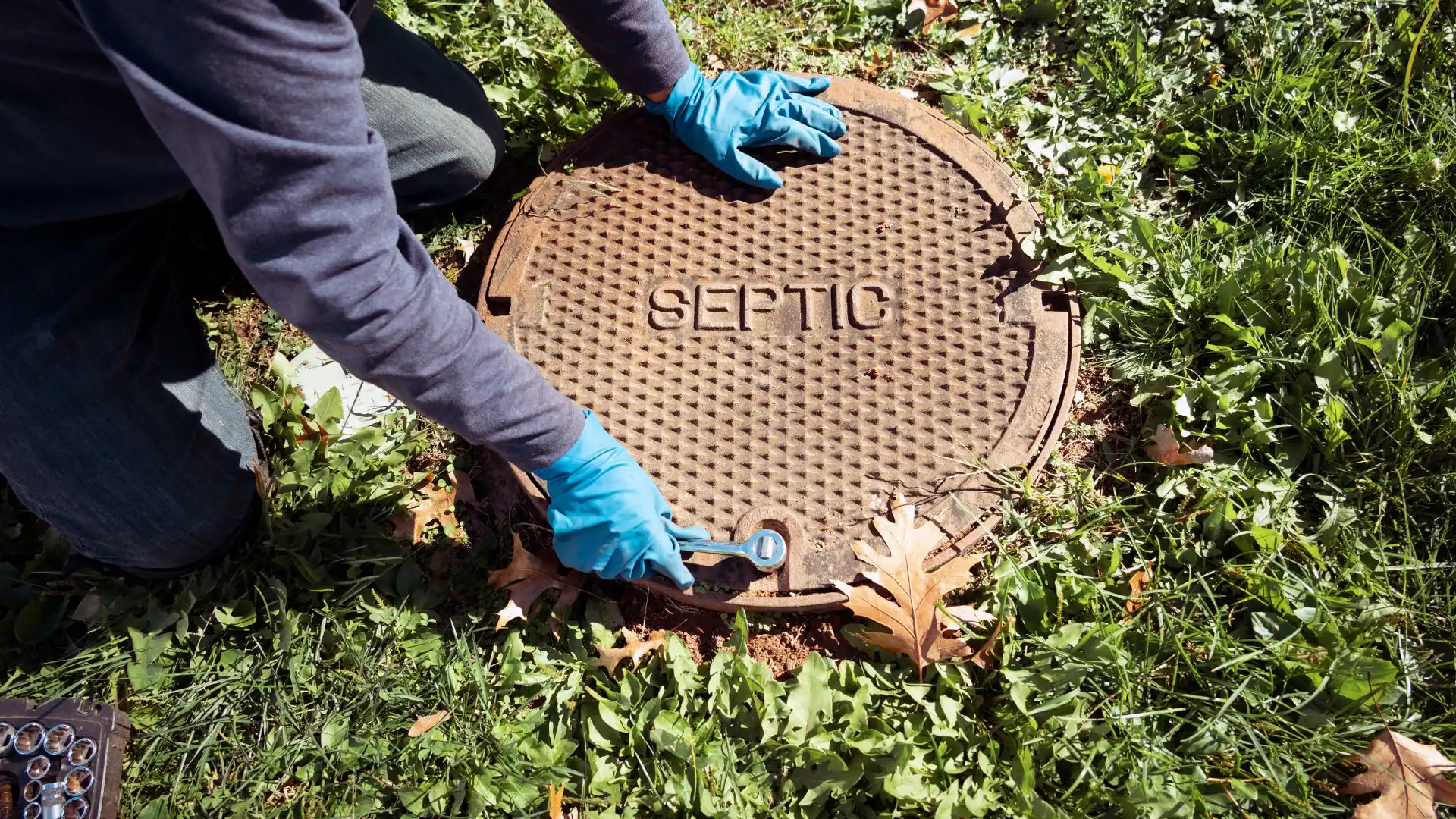
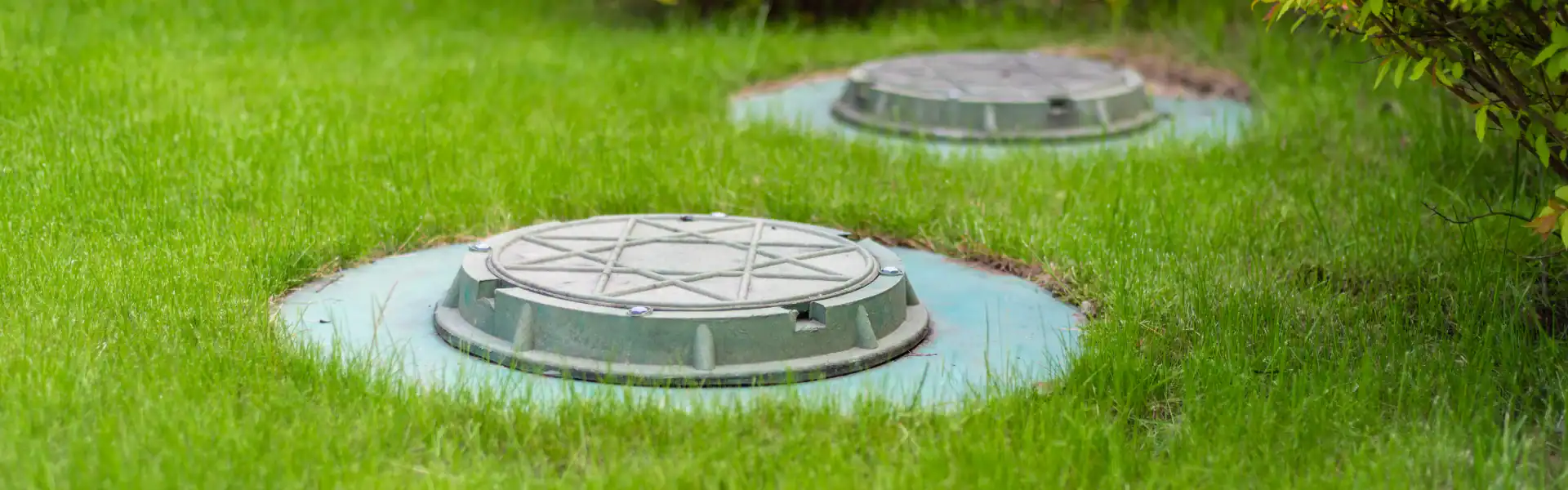
There is another wrinkle specific to Suffolk County that most drainage content never mentions: cesspools and conventional septic systems. Unlike most of New York State, a large portion of Suffolk County properties still rely on these systems rather than municipal sewers. When the soil around a cesspool becomes chronically saturated, the system loses its ability to process waste effectively. A drainage problem in your yard is not just a lawn issue or even a foundation issue, it can compromise your sewage system too.
So when you see standing water, the question is not just how to get rid of it. The question is what it is telling you about what is happening beneath the surface, and how much longer you can afford to wait before finding out.
The term “French drain” gets thrown around loosely, and that is part of the problem. A French drain, done right, is a perforated pipe set in a gravel-filled trench, wrapped in geotextile filter fabric, and installed at a precise slope that moves water away from the problem area toward a safe discharge point. That filter fabric is the detail that separates a system that lasts thirty years from one that clogs in three. Without it, fine soil particles migrate into the gravel over time, clogging the pipe from the inside out.
Depth matters too. Most French drains in Suffolk County are installed between 12 and 24 inches deep, depending on the severity of the water issue and the surrounding grade. A system that is too shallow will not intercept groundwater before it reaches the foundation. One that is too deep may hit the water table itself and become counterproductive.
There is also the interior versus exterior distinction, which is worth understanding before you call anyone. An exterior French drain is installed outside the foundation to intercept surface and groundwater before it reaches the home. This is the right solution when the primary problem is runoff and surface water. An interior French drain runs along the inside perimeter of the basement, collecting water that has already made it through the walls and directing it to a sump pump for removal. Both systems have their place, and in some Suffolk County homes with chronic high water table exposure, you may need both working in tandem.
The point is not to overwhelm you with options. It is to make clear that a proper diagnosis has to come before any installation. A contractor who quotes you over the phone without walking the property first is guessing. Soil conditions, slope, water table depth, proximity to the foundation; all of it shapes what the right system looks like for your specific lot.
Want live answers?
Connect with a Gold Coast Landworks expert for fast, friendly support.
One of the most common mistakes homeowners make is treating drainage as an isolated problem with an isolated fix. In reality, drainage issues are connected to what is happening above and around them: the grade of the land, the vegetation that has been cleared or left in place, and the soil conditions that excavation work either addresses or ignores.
This is especially true on Suffolk County properties that have seen any recent land clearing activity. When overgrown vegetation is removed, the root systems that were absorbing water disappear with it. Grading patterns change. Runoff that used to be absorbed now has nowhere to go. A drainage solution installed without accounting for those changes will not hold up.
If you have recently cleared a portion of your property, or you are planning to, drainage should be part of the conversation from the start, not an afterthought once the water problems show up. Mature vegetation does not just look good; it functions as a living drainage system. Tree roots draw moisture deep into the soil. Ground cover slows runoff and allows water to percolate rather than sheet across the surface. When that vegetation is removed, even partially, the hydrology of the lot changes.
On Long Island properties with clay-heavy soil, this effect is amplified. Clay does not absorb water the way sandy or loamy soil does. Once the surface layer is disturbed through clearing or excavation, water that previously had a slow, managed path through root systems and organic matter now moves faster and pools more readily. We have seen this play out on properties across inland Suffolk County: a cleared lot that seemed fine during dry months becomes a drainage problem by the first wet spring.
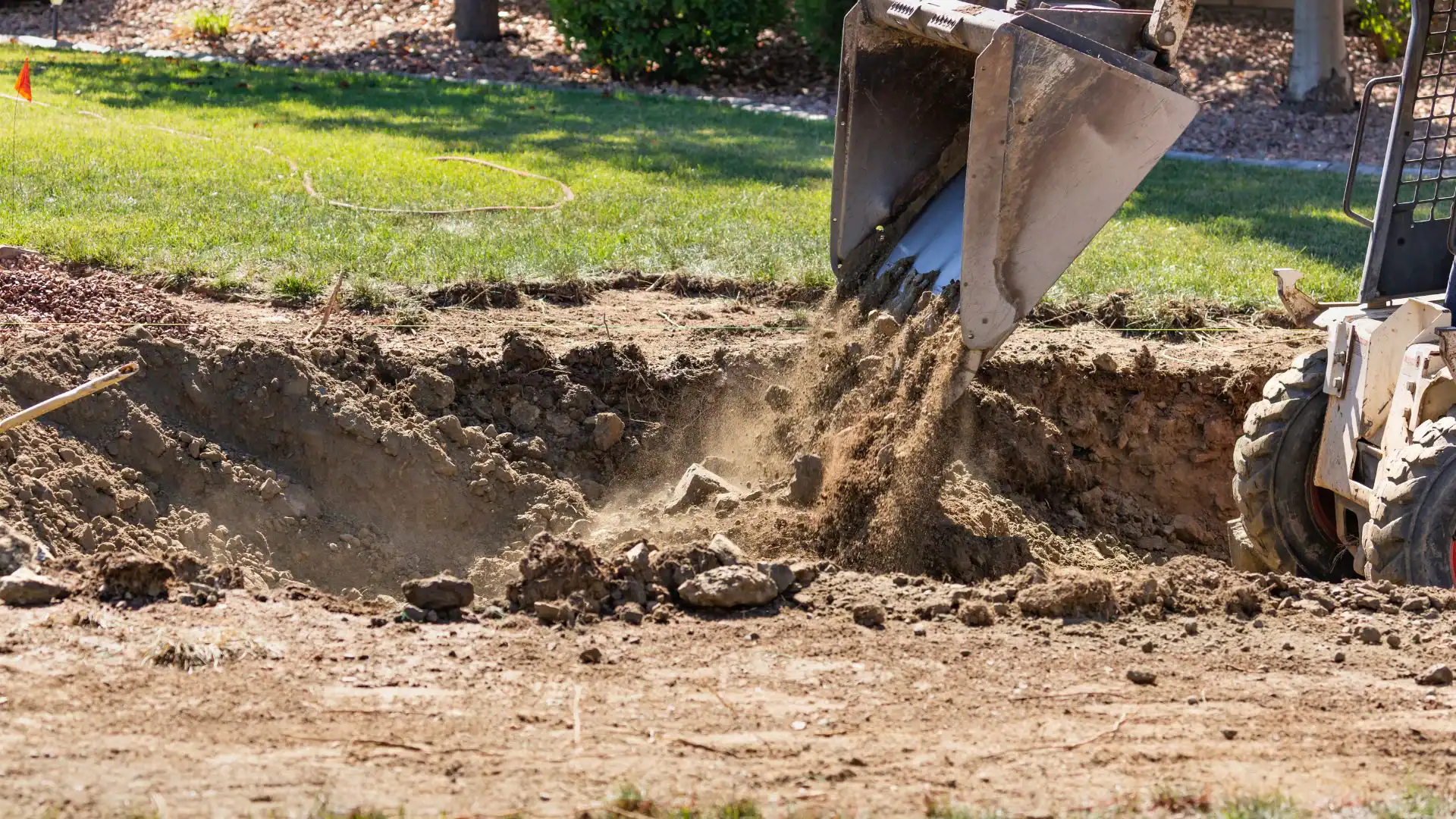
The solution is not to avoid clearing land. It is to plan the drainage infrastructure as part of the same project. Proper site grading during excavation can redirect water flow before it becomes a problem. Installing drainage channels, dry wells, or French drains during the same mobilization as land clearing work is significantly more efficient, and less disruptive, than excavating a finished yard later to retrofit a drainage system.
When one contractor handles the clearing, the grading, the excavation, and the drainage installation, there is no hand-off gap where the drainage plan gets lost between trades. The person who graded the land knows where the water moves. That continuity produces better outcomes than coordinating between separate specialists who have never seen each other’s work.
Homeowners tend to treat yard drainage and basement waterproofing as separate categories: one is a landscaping problem, the other is a construction problem. But they are two sides of the same issue. If your basement is taking on water, the water has to be coming from somewhere. And in most cases on Long Island properties, it is coming from the yard, either as surface runoff that pools near the foundation or as groundwater that rises with the water table and finds its way through cracks and porous concrete.
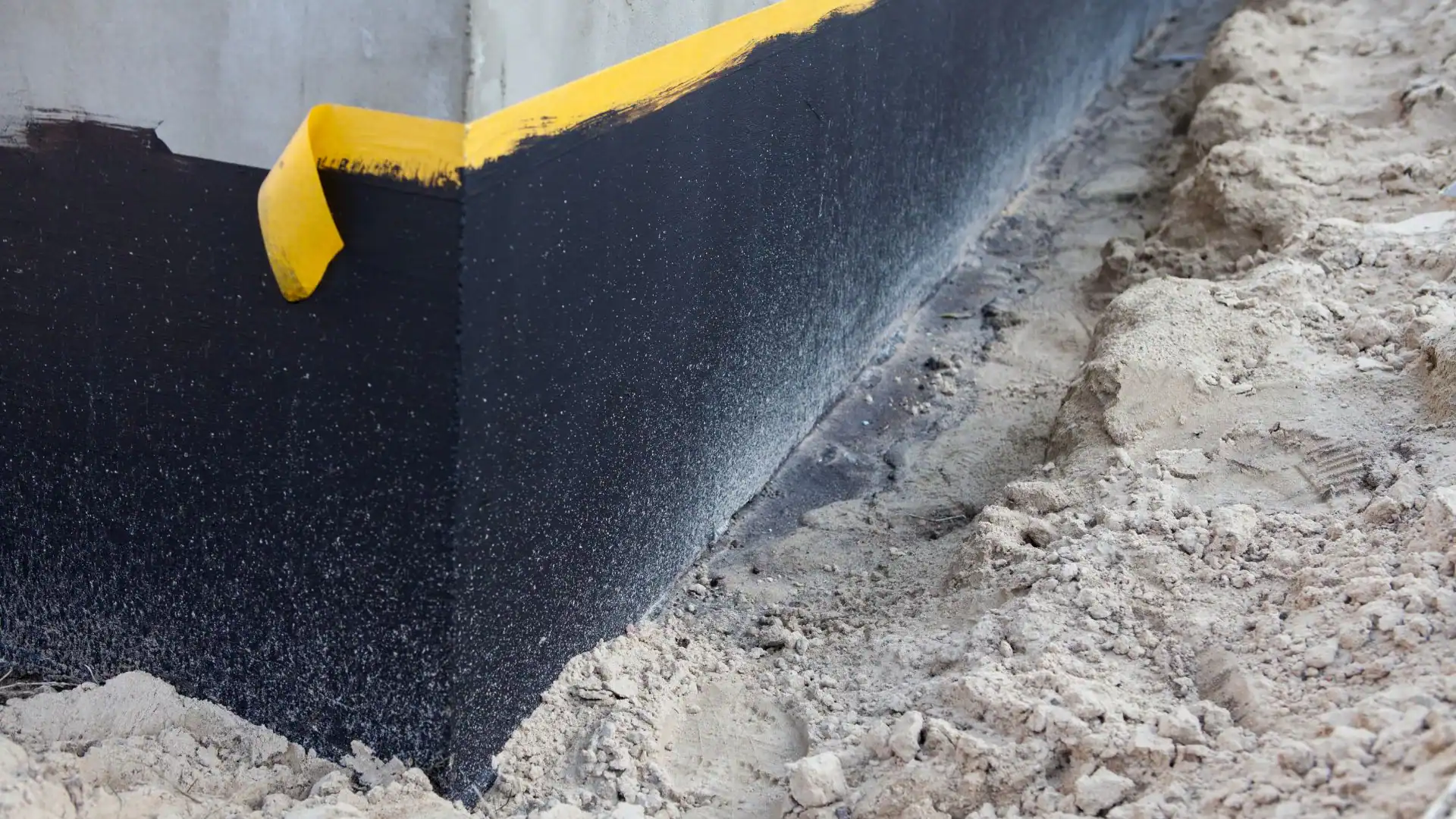
Fixing the basement without addressing the yard means you are managing the symptom while the cause keeps operating. Interior waterproofing systems, sump pumps, interior French drains, drainage channels along the basement perimeter, are valuable tools, but they work best when the exterior drainage is also doing its job. A well-designed exterior French drain intercepts water before it reaches the foundation wall, reducing the hydrostatic pressure that interior systems then have to manage.
For Suffolk County homeowners, this matters more than it would in most other markets. The county’s shallow water table means groundwater flooding is not a rare event; it is a recognized hazard that the county’s own planning documents identify explicitly. When the water table rises to or near the surface after a sustained rain event, a basement without both exterior and interior protection is genuinely vulnerable.
Interior waterproofing for Long Island homes typically runs between $5,000 and $8,000, a fraction of what foundation damage repair costs. Mold can begin growing within 24 to 48 hours of water intrusion. One flood event that goes unaddressed can easily require five figures in remediation work. The math on proactive waterproofing is straightforward. What makes it complicated is not understanding that the yard and the basement are part of the same system, and that solving both together is more effective than solving either one alone.
If your yard consistently holds water after rain, if your basement shows any sign of moisture or seepage, or if you have recently cleared or graded land on your property, those are the moments to get a professional set of eyes on the situation, not after the next major storm proves the problem is worse than you thought.
The right contractor will walk your property before recommending anything. We will look at your soil, your grade, your proximity to the foundation, and how water moves across your lot. We will not quote you over the phone.
Gold Coast Landworks handles drainage, excavation, land clearing, and landscaping services as an integrated scope of work, which means the person designing your drainage solution is the same team that understands what the land looked like before and after clearing, and how the grading affects where water goes. If you are dealing with drainage issues anywhere in Suffolk County, reach out and let us take a look.
Summary:


Article details: