
Soggy yards, eroding slopes, and flooded lawns are common on Long Island — and they rarely fix themselves. Here's what's actually going on and what to do about it.

If your yard takes days to dry out after a rainstorm, or you’ve noticed water creeping toward your foundation every time it rains hard, you’re not imagining things — and you’re not alone. Drainage problems are one of the most common complaints from homeowners across Long Island, from Oyster Bay to Old Westbury to Huntington. The frustrating part is that they rarely stay the same. They get worse. What starts as a soggy patch of lawn eventually becomes eroded slopes, dead grass, and water in places it absolutely should not be. Here’s what’s causing it — and what we can actually do about it.
Long Island’s drainage challenges aren’t random — they’re the product of specific conditions that come with living here. The North Shore sits on a glacially deposited landscape, and the soils in communities like Locust Valley, Brookville, and Muttontown tend to be heavy with clay. Clay drains at a fraction of the rate of sandy loam soil, which means water has nowhere to go during a heavy rain event. It pools. It runs. And it finds the path of least resistance — which is often straight toward your house.
Add to that the fact that a large portion of Long Island’s housing stock was built in the post-World War II suburban expansion. Many of these homes are now 60 to 80 years old, and the drainage infrastructure that was installed with them has aged accordingly. Original grading has settled. Clay tile drain pipes have cracked or collapsed. Downspouts that once discharged water safely away from the foundation now empty into compacted soil that can’t absorb it fast enough.
Then there’s the weather. Long Island receives around 44 to 47 inches of rainfall annually — spread across every season. Nor’easters can drop two to five inches of rain in under 48 hours. Summer thunderstorms can deliver an inch or more in under an hour. Snowmelt in late winter hits when the ground is still partially frozen. There’s no off-season for drainage stress here.

Standing water is the symptom most homeowners notice first, but the cause isn’t always obvious. A yard that stays soggy for days after a rain event is telling you one of a few things: the soil can’t absorb water fast enough, the grade is directing water into a low spot with no exit, or an existing drainage system has failed and is no longer moving water the way it was designed to.
Clay soil is the most common culprit on Long Island’s North Shore. When clay gets saturated, it essentially becomes impermeable — water sits on top of it because it has nowhere to go. Compacted soil from years of foot traffic, lawn equipment, or construction makes this worse. Research consistently shows that compacted soil can reduce water infiltration by 50 to 80 percent compared to healthy, loose soil. That’s a significant difference when you’re dealing with a Nor’easter dropping three inches of rain overnight.
Low spots in the yard compound the problem. Water flows to the lowest point, and if that point doesn’t have a way to drain — through a catch basin, a dry well, or a properly graded outlet — it just sits there. Every rain event adds more water to the same spot, and over time the soil in that area becomes chronically waterlogged. Grass dies. Moss and algae take over. The ground stays soft enough to sink into even on dry days.
The fix depends on the cause. Sometimes regrading the yard to create a positive slope away from problem areas is enough. More often, the solution involves a combination of grading corrections, a French drain to intercept and redirect subsurface water, and a dry well or catch basin to give that water a proper outlet. On Long Island, dry wells are particularly well-suited to the job — they allow water to percolate back into the ground and recharge the sole-source aquifer that supplies drinking water to the island’s 2.8 million residents. That’s not just good drainage design; it’s the environmentally responsible approach for this specific place.
One thing worth knowing: standing water breeds mosquitoes within 48 to 72 hours of a rain event. On Long Island, where West Nile virus and Eastern Equine Encephalitis are documented public health concerns, eliminating the conditions that allow water to pool isn’t just about protecting your lawn. It matters for your family’s safety too.
Erosion tends to sneak up on homeowners. It doesn’t announce itself the way a flooded basement does. Instead, you start noticing that the slope at the back of the property looks a little steeper than it used to. There are bare patches where grass used to grow. Tree roots are more exposed than they were a few years ago. The mulch in the planting beds keeps washing into the lawn. These are all signs that water is moving across your property with enough force and volume to carry soil with it — and once that process starts, it accelerates.
On hilly North Shore properties in communities like Cold Spring Harbor, Lloyd Harbor, and the hillier parts of Oyster Bay, slope erosion is a persistent problem. Water running down a grade picks up speed, and with that speed comes the ability to move soil. Over time, even a modest slope can lose significant topsoil depth — and topsoil that took decades to develop can’t be replaced quickly. Once it’s gone, the slope becomes less stable, tree roots become more vulnerable, and the erosion continues at a faster rate.
The connection to drainage isn’t always obvious until you think it through. Erosion is almost always a water management problem at its core. Water that has nowhere to go — or too much of it moving too fast — is what strips topsoil from slopes. The solution isn’t just to plant ground cover and hope for the best, though the right plantings do play a role. It’s to intercept the water before it gains speed, slow it down, and give it a controlled path to follow.
This is where drainage and landscaping genuinely work together. A properly designed drainage swale, for example, can redirect runoff away from an eroding slope while also serving as a planted feature that adds visual interest to the property. French drains installed upslope can intercept water before it reaches the vulnerable area. Retaining structures, when needed, can stabilize a slope while creating planting opportunities. The goal is a solution that stops the erosion and leaves the property looking intentional — not patched together.
What we’ve seen on Gold Coast properties is that homeowners who address erosion early spend significantly less than those who wait. A slope that needs regrading and a French drain today can become a slope that needs major soil restoration, retaining wall reconstruction, and tree root management if left alone for another few years.
Want live answers?
Connect with a Gold Coast Landworks expert for fast, friendly support.
Of all the drainage problems Long Island homeowners deal with, the ones involving foundation runoff and lawn flooding tend to carry the highest stakes. Water that consistently pools near your foundation walls isn’t just an outdoor problem — it’s working its way into your home’s structural integrity with every rain event. And a lawn that floods regularly isn’t just an eyesore; it’s a sign that the property’s entire water management system has broken down.
Both problems are fixable. But the window to fix them affordably closes a little more with each passing season. Foundation repair from water damage runs anywhere from a few thousand dollars for minor issues to well over $30,000 for structural remediation. Addressing the outdoor drainage that’s causing the problem costs a fraction of that — and it solves it at the source rather than managing the symptom from the inside.
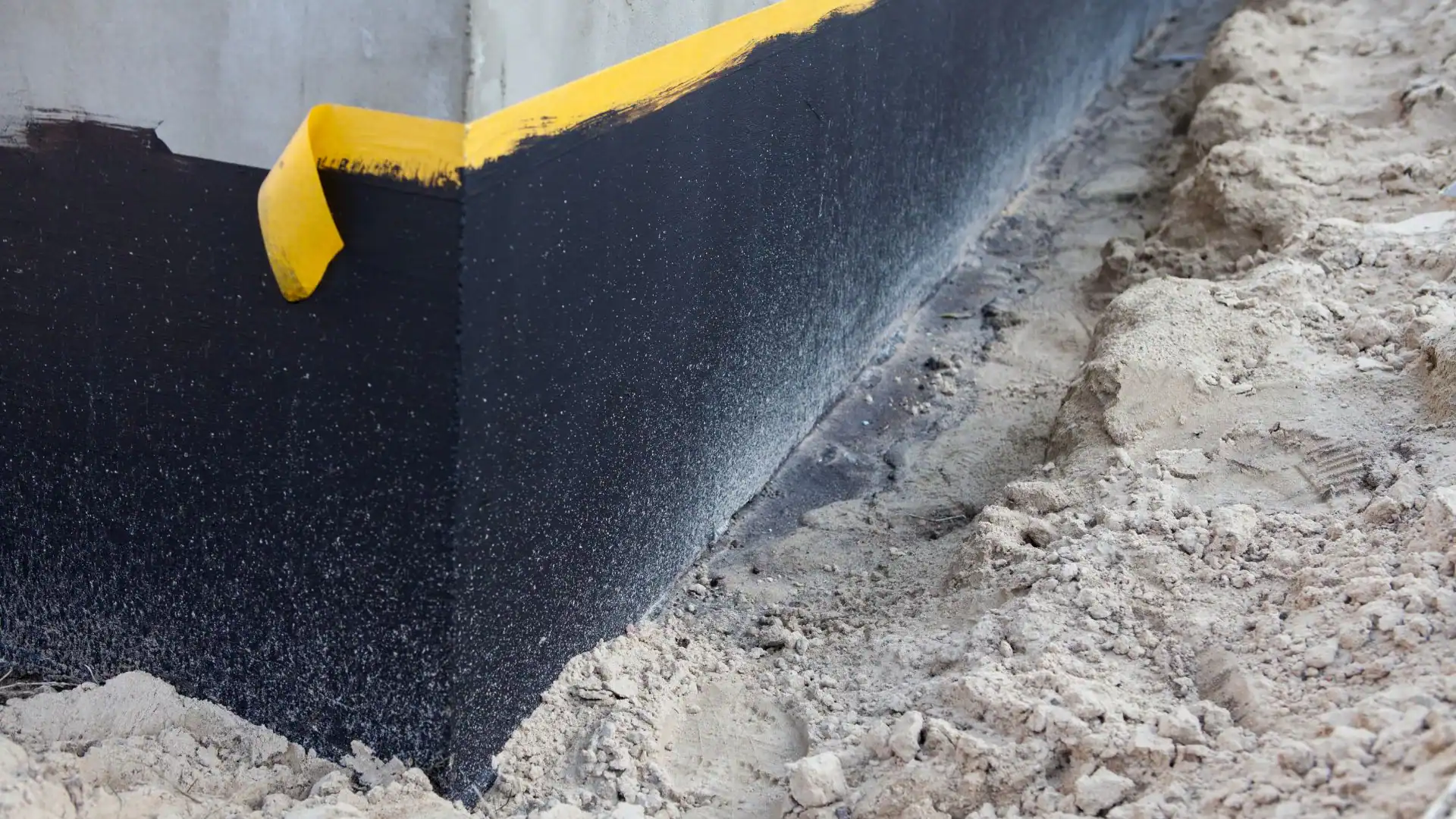
The standard grading recommendation for residential properties is a minimum six-inch drop over the first ten feet away from the foundation. That slope is what keeps water moving away from your house rather than toward it. On many older Long Island homes, that grade has changed over decades — soil settles, landscaping gets added and removed, and what was once a proper positive slope becomes flat or even slightly negative, directing water straight toward the foundation.
You don’t always need to see water against the foundation wall to have this problem. If your basement gets damp after heavy rain, if you notice efflorescence (white mineral deposits) on basement walls, or if you’ve had interior waterproofing installed but the moisture keeps coming back, there’s a good chance the root cause is outside. Interior sump pumps and waterproofing membranes manage the water after it arrives — they don’t stop it from getting there in the first place.
Fixing foundation runoff typically involves a combination of regrading the soil immediately around the house, extending downspouts so they discharge water at least five to ten feet from the foundation, and in many cases installing a French drain or catch basin system to intercept and redirect water before it reaches the building. On older Gold Coast properties where mature landscaping limits how much regrading is practical, a well-placed catch basin with an underground outlet to a dry well can do the heavy lifting.
What makes this work on Long Island specifically is understanding how the whole property drains — not just the area right next to the house. Water that gets redirected away from the foundation still needs somewhere to go. If it’s just pushed into another low spot in the yard, you’ve moved the problem, not solved it. A properly designed drainage system accounts for the full path water takes across the property, from where it enters to where it exits, and every point in between.
We’ve worked on properties in Brookville, Matinecock, and the Oyster Bay area where homeowners had already spent money on interior waterproofing systems that kept failing — not because the interior work was bad, but because the exterior drainage was never addressed. Once the outdoor system was corrected, the basement moisture problem largely resolved itself.
A lawn that floods after every significant rain event is dealing with more water than the soil can absorb and more than the existing drainage infrastructure can move. On Long Island, this is especially common after Nor’easters and the kind of intense summer thunderstorms that roll through Nassau and Suffolk counties between June and September. The ground gets saturated, the drainage system — if there is one — gets overwhelmed, and the result is a yard that looks like a shallow pond for hours or days at a time.
The instinct for many homeowners is to treat this as a purely functional problem: install some pipes, move the water, done. And the pipes are certainly part of it. But the most durable solutions treat the lawn and the drainage system as connected — because they are. A lawn with healthy, deep-rooted turf absorbs significantly more water than a lawn with compacted soil and shallow roots. Planting beds with proper grading and organic soil amendments act as natural sponges. Strategic use of plants that tolerate wet conditions in naturally low areas can reduce the volume of water that needs to be managed mechanically.
This is the difference between a drainage contractor who installs a system and leaves, and one who thinks about the whole property. When we work on a flooded lawn, we’re looking at the grading, the soil condition, the existing drainage infrastructure, the hardscape features that might be contributing to runoff, and the landscaping — all of it together. A paver patio without proper drainage integration, for example, can redirect a significant volume of water onto the lawn. A mulch bed graded the wrong way can dam water against a foundation wall. These details matter, and they’re the reason drainage work done without considering the surrounding landscape often falls short.
The good news is that when drainage and landscaping are designed together, the result tends to look better than what was there before. A drainage swale becomes a planted feature. A corrected grade opens up new lawn area that was previously too wet to use. A dry well installation, once the ground is restored, is invisible — the yard just works the way it should. That’s the goal: a property that handles whatever Long Island’s weather delivers, and still looks the way you want it to.
Most drainage problems on Long Island don’t have a single cause or a single fix. They’re the result of aging infrastructure, challenging soils, decades of landscape changes, and weather that doesn’t let up. We get lasting results by taking the time to understand what’s actually happening on your specific property — not by showing up with a default solution before we’ve even walked the yard.
If your property has standing water, erosion, foundation runoff, or a lawn that floods regularly, the right time to address it is before the next storm makes it worse. Every rain event that runs through a failing drainage system causes incremental damage that compounds over time.
We work with Long Island homeowners to assess, design, and install drainage solutions that are built around how your property actually drains — and how you want it to look when the work is done. Reach out to start a conversation about what’s happening on your property.
Summary:


Article details: