
Poor grading quietly threatens Long Island foundations every time it rains. Here's how excavation and grading work together to keep water where it belongs.

If your yard holds water for days after a storm, or you’ve noticed damp walls in your basement every time it rains hard, the problem probably isn’t your gutters. It’s the ground. The way your land is shaped — its slope, its contours, the direction it naturally sheds water — determines whether rain flows away from your home or toward it. On Long Island, where nor’easters roll through every winter and the soil ranges from heavy clay in Nassau County to sandy outwash in Suffolk, getting that shape right isn’t optional. Here’s what proper excavation and grading actually do, and why it matters more here than most people realize.
Grading is the process of shaping the ground around your home so water drains away from the structure instead of pooling against it. The International Residential Code sets a clear standard: the ground should drop at least six inches over the first ten feet away from your foundation. That slope is what sends rainwater toward the yard, a swale, or a drainage system — rather than letting it sit against your basement wall.
When that slope is missing, flat, or — worse — tilting back toward the house, water has nowhere to go but down. It saturates the soil around your foundation, builds up hydrostatic pressure against the walls, and eventually finds its way in. The damage that follows — cracks, seepage, mold, settling — doesn’t happen overnight, but it compounds quietly over years.
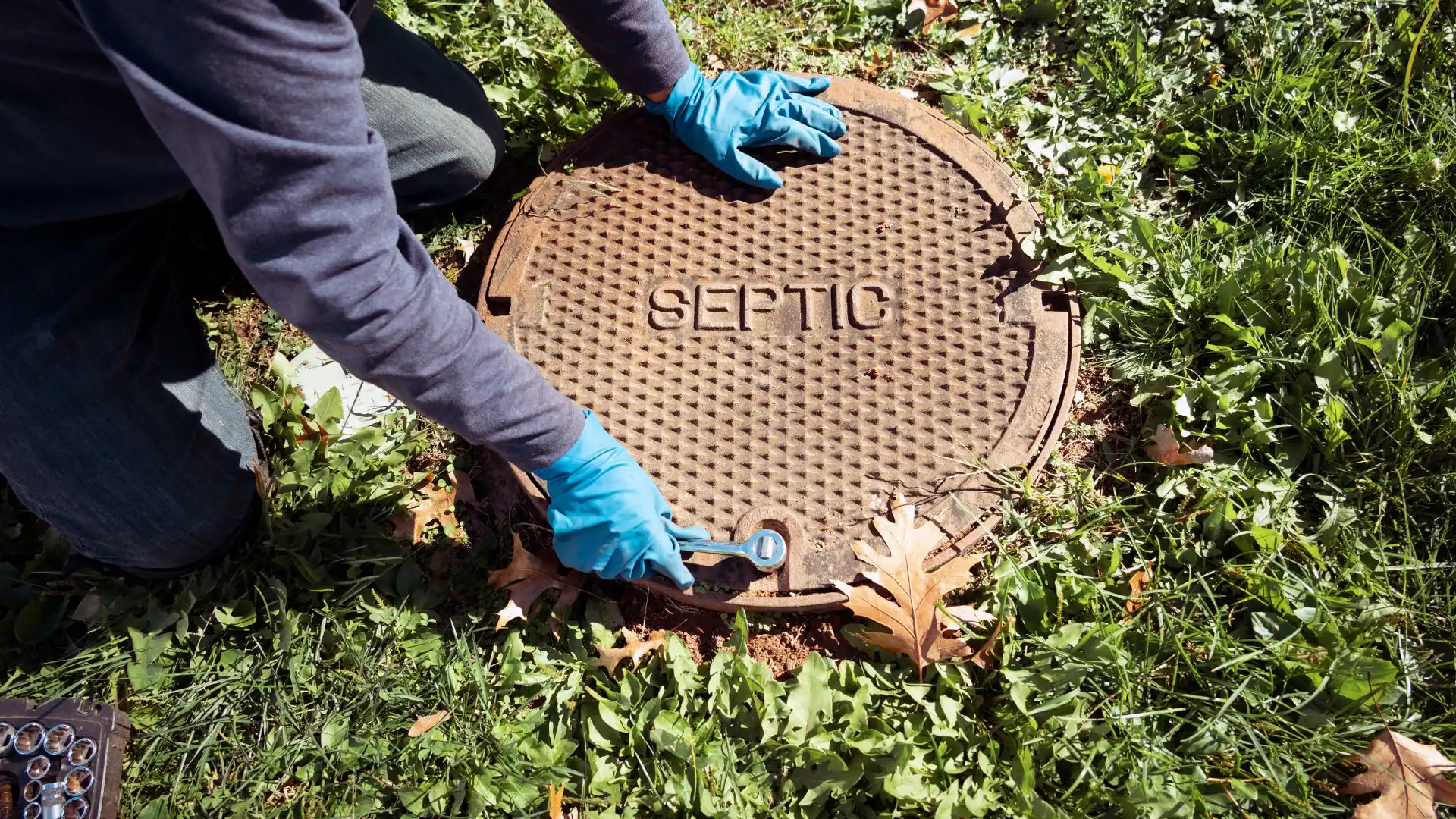
Long Island’s housing stock makes this problem more common than most homeowners expect. A large portion of Nassau and Suffolk County homes were built during the post-war suburban boom of the 1950s through 1970s. That’s 50 to 70 years of settling, landscaping changes, and added hardscaping — all of which can quietly shift the original grade and redirect water toward the foundation instead of away from it.
Add a patio, extend a driveway, or install a pool deck, and you’ve just added impervious surface that sheds water somewhere. If that somewhere is toward the house, you’ve created a drainage problem that didn’t exist before. This is one of the most common calls we get — a homeowner who renovated their backyard and suddenly has a wet basement the following spring.
Nassau County’s clay-heavy soils make this worse. Clay doesn’t drain well. When it gets saturated, it swells and holds water against your foundation like a sponge. Then when it dries out, it contracts — and that repeated cycle of expansion and contraction puts real stress on concrete walls over time. Sandy soils in central and South Shore Suffolk County behave differently: they drain fast, but that means surface water moves quickly downward, often straight toward the foundation rather than running off laterally.
Neither soil type is forgiving when the grade is wrong. That’s why grading on Long Island isn’t a one-size-fits-all fix — it requires understanding what’s actually under the surface of a given property and designing the slope accordingly. A proper site assessment before any work begins is what separates a real solution from one that just moves the problem somewhere else.
People sometimes treat excavation and grading as separate services — digging is one thing, leveling is another. In practice, they’re sequential steps in the same process. Excavation removes or repositions soil to create the right topography. Grading then shapes that topography to achieve the correct drainage slopes. You can’t do one well without thinking about the other.
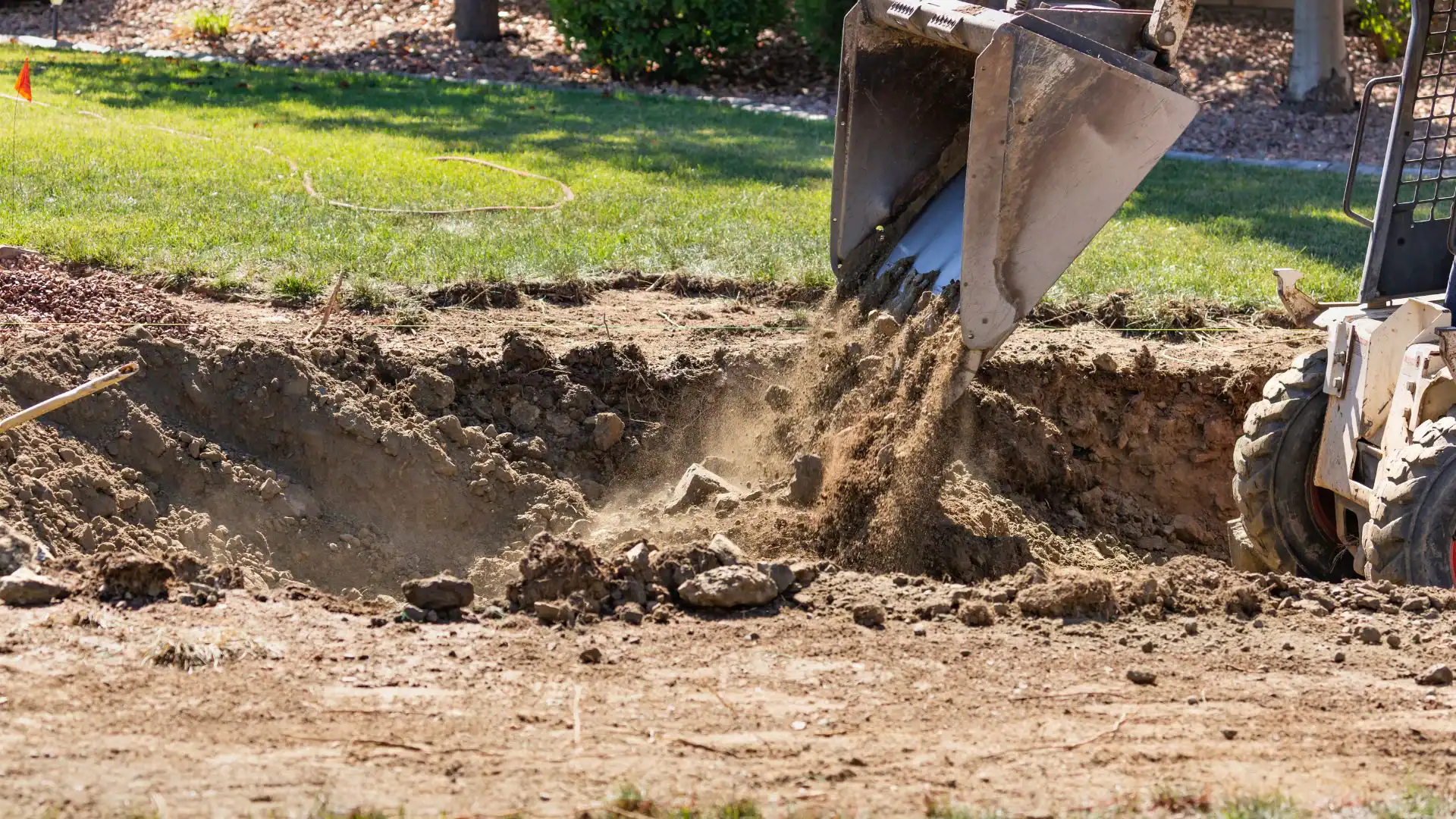
When we approach a drainage correction project, the first step is reading how water currently moves across the property — where it concentrates, what path it takes, and where the grade is working against the homeowner. From there, excavation creates the cuts and fills needed to reshape the land. Fill material has to be properly compacted, or it will settle unevenly and create new low spots. Laser-guided equipment lets us hit precise grades on terrain that looks flat to the eye but has critical variations of just a few inches.
On Long Island’s North Shore — the hilly, glacially-sculpted terrain of communities like Huntington, Oyster Bay, and Cold Spring Harbor — water behaves very differently than it does on the flat South Shore. Hills concentrate runoff at the base of slopes. Valleys collect it. Properties that sit at the bottom of a grade are absorbing water from their neighbors’ land in addition to their own. Proper excavation and grading accounts for all of that, not just the immediate area around the foundation.
Once the grade is established, drainage infrastructure — swales, dry wells, catch basins, French drains — can be integrated into the design. But those systems only work as well as the grade they’re built into. If the land isn’t shaped correctly first, no amount of pipe or stone will reliably solve the problem. Grading is the foundation that makes everything else function.
Want live answers?
Connect with a Gold Coast Landworks expert for fast, friendly support.
Fixing a drainage problem from the outside — through proper grading and a well-designed drainage system — is more effective and typically less expensive than dealing with water after it’s already inside. Interior waterproofing systems like sump pumps and interior french drains have their place, but they manage water that has already reached the foundation. Exterior grading and drainage correction stops it before it gets there.
The cost of inaction is real. Water damage repairs average $3,000 to $8,000 per incident, and that’s before factoring in mold remediation or structural work. Foundation repairs for chronic water intrusion can run significantly higher. Proper grading is an investment that pays for itself by preventing a much larger problem down the road.
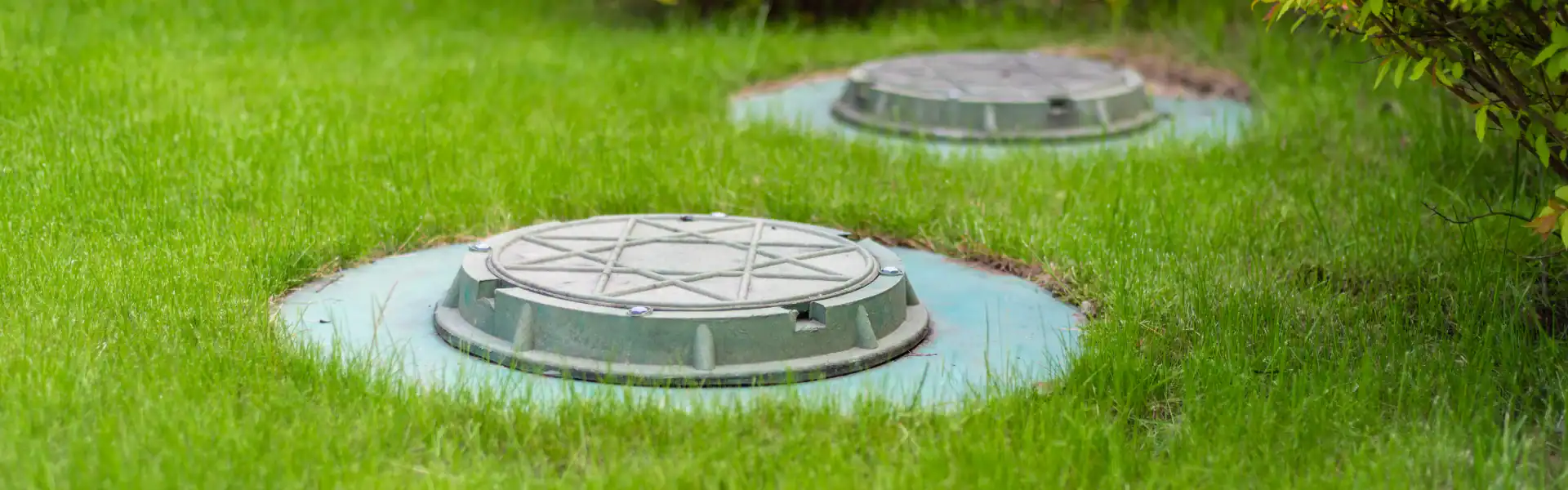
Drainage correction isn’t one universal fix — it’s a combination of approaches that depends on the specific property, the soil type, and how water is currently moving across the land. On Long Island, a few solutions come up consistently because they work well with the local geology and climate.
Dry wells are one of the most effective drainage tools in Suffolk County’s sandier soils. A dry well is a buried perforated structure that collects surface water and releases it slowly into the surrounding soil. Because sandy outwash soils have good infiltration capacity, dry wells can handle significant volumes of water without backing up. In Nassau County’s clay soils, dry wells are less effective on their own — the surrounding soil simply can’t absorb water fast enough — so they’re often combined with French drains or swales that move water away from the structure before it infiltrates.
Swales — shallow, gently sloped channels that direct surface water to a collection point — are a common component of Long Island drainage systems because they work with the natural topography rather than fighting it. A properly designed swale follows the grade, moves water efficiently, and can be vegetated to prevent erosion. When we’re grading a property, swales are often built into the design so that water has a clear, engineered path away from the home.
Catch basins and channel drains handle concentrated runoff — particularly from driveways, patios, and hardscaped areas where water has nowhere to infiltrate. These are especially relevant on Long Island properties where post-war homes have been updated with modern hardscaping that generates more runoff than the original drainage system was designed to handle.
What ties all of these together is the grade itself. Every drainage component — dry well, swale, catch basin — depends on the land sloping correctly toward it. Install a French drain in a flat or reverse-graded yard and the water won’t reach it. Get the grade right first, and the rest of the system functions the way it’s supposed to.
One question we hear often is: “How do I know if my grading is the problem?” The most telling signs are water that pools within a few feet of the foundation after rain, basement walls that show moisture or efflorescence (the white chalky residue left by water moving through concrete), and soil that stays saturated for days after a storm. If your driveway or walkway is cracking and heaving every winter — a common issue in Long Island’s freeze-thaw cycles — that’s often a drainage symptom too. Water in poorly drained soil freezes, expands, and breaks whatever’s on top of it.
Another common question: “Can I just add topsoil around the foundation myself?” In minor cases, building up the grade with topsoil can help redirect surface water. But it’s not a substitute for a proper assessment. Improperly placed fill settles unevenly, can compact against the foundation wall, and sometimes creates new low spots that collect water. If you’ve already tried adding soil and the problem persists, the issue likely runs deeper than surface grade alone.
Homeowners also ask whether they need a permit for grading work on Long Island. The answer depends on the scope of work, the municipality, and whether the property is near a wetland or in a FEMA flood zone. Nassau County and Suffolk County both have Home Improvement Contractor licensing requirements for residential work, and certain projects — particularly those that disturb larger areas of land or affect drainage near environmentally sensitive areas — may require additional permits. We handle the permitting process for you, so you don’t have to navigate local requirements on your own.
Finally, people ask: “Why does this keep happening even after I’ve had drainage work done?” This is more common than it should be.Drainage solutions that address only one component — say, a French drain installed without correcting the grade — often move the problem rather than solve it. Water finds the next low point. A complete solution starts with understanding the full picture of how water moves across your Long Island property, then addressing the grade first and the drainage infrastructure second.
Water damage doesn’t announce itself until it’s already cost you something. By the time you’re seeing cracks in the basement wall or pulling up wet carpet after a nor’easter, the grading problem that caused it has usually been building for years. The good news is that it’s a solvable problem — and solving it from the outside, before water reaches the foundation, is almost always more effective than dealing with it after the fact.
Long Island’s combination of clay and sandy soils, shallow water tables, aging housing stock, and year-round storm exposure makes proper grading more important here than in most parts of the country. The shape of the land around your home is doing quiet work every time it rains — either protecting your foundation or undermining it.
If you’re dealing with standing water, a wet basement, or drainage issues that haven’t been fully resolved, we work with Long Island homeowners across Nassau and Suffolk County to diagnose the root cause and get the grade right. Reach out to start the conversation.
Summary:


Article details: