Think land clearing is just cutting down trees? There is a lot more to it, especially on Long Island, where soil, wetlands, and local regulations all play a role.

You bought the property. Or maybe you have owned it for years. Either way, there is a stretch of land that has gotten away from you, overgrown, uneven, or completely unusable, and you are trying to figure out what it takes to fix it. Land clearing sounds simple enough on the surface. But once you start getting quotes, asking questions, and reading the fine print, it gets complicated fast. This guide is here to cut through that. We will walk you through what professional land clearing really involves, what can go wrong when it is done poorly, and what makes Suffolk County properties a unique challenge that not every contractor is prepared for.
Land clearing is the process of removing trees, shrubs, brush, stumps, and root systems from a piece of property to prepare it for construction, landscaping, drainage work, or general use. That is the basic definition. But the gap between a basic definition and a job done right is where most homeowners run into trouble.
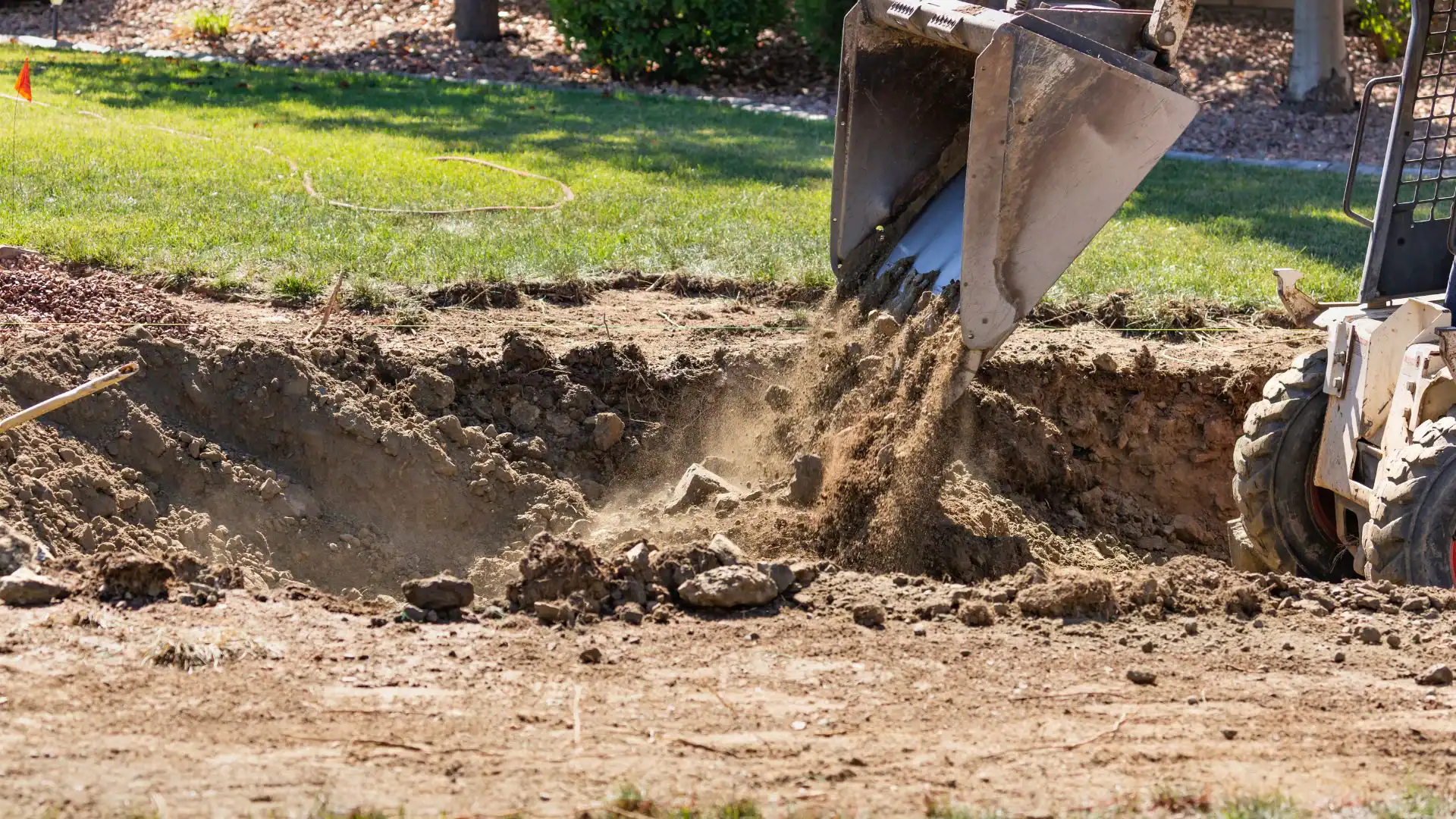
A complete land clearing job does not end when the vegetation comes down. It includes stump grinding, root removal, rough grading to establish a stable and usable surface, and proper debris handling, if that means chipping material on-site or hauling it away entirely. A property that has been cleared but left with exposed root systems, uneven terrain, and no thought given to how water will move across it is not ready for anything.
That distinction matters more than most people realize, especially when you are planning to build, install a pool, or hand the site off to a landscaping crew expecting a clean slate.
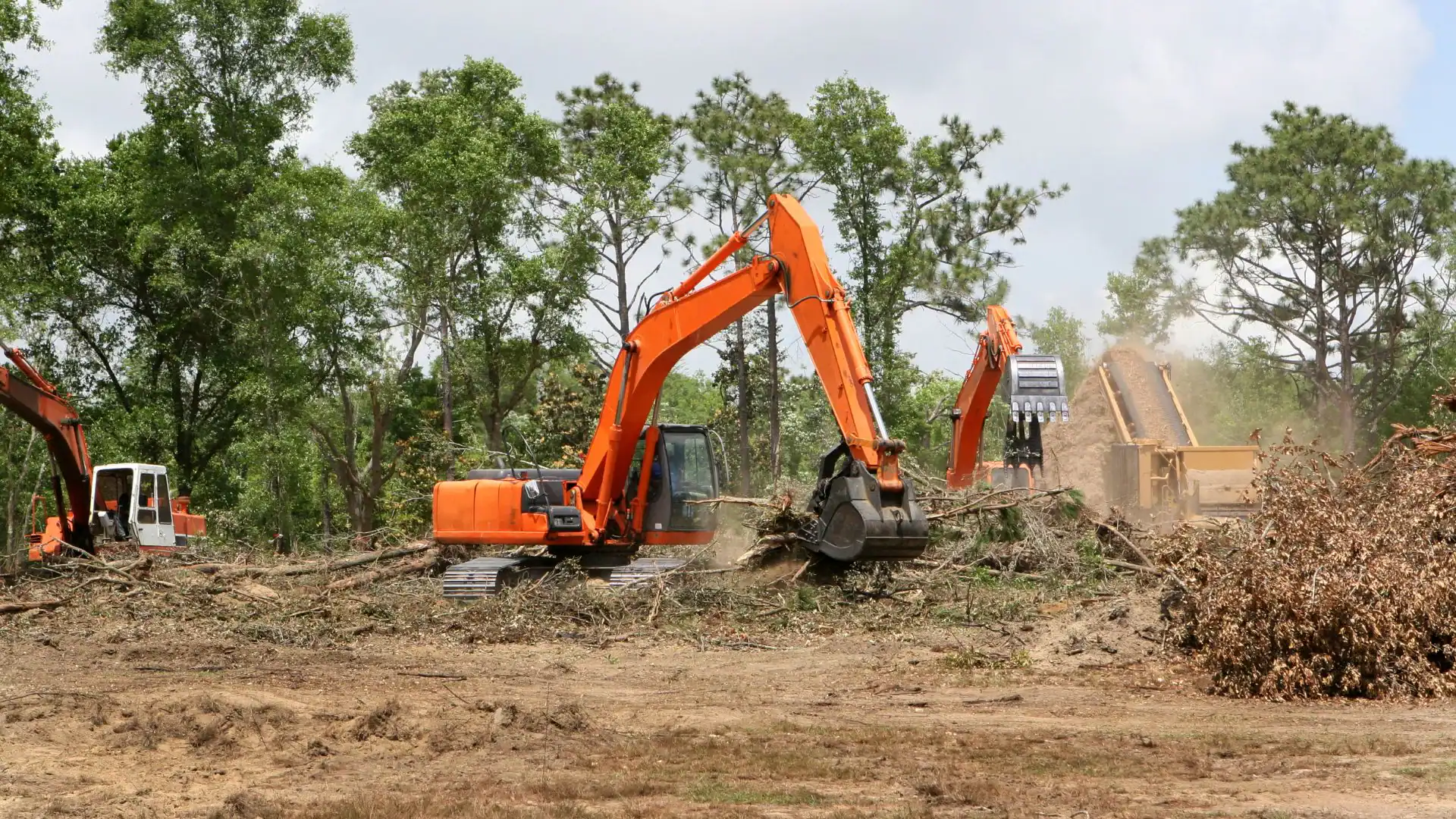
The method we use depends on the size of your property, the type and density of vegetation, equipment access, and what the land will be used for afterward. There is no single right answer, but there are wrong ones, and they usually come down to using the cheapest approach regardless of what the site needs.
For most residential lots in Suffolk County, NY, the most common approach is what is often called cut and grind; trees and large shrubs are removed with chainsaws or heavy equipment, and stumps are ground down below grade. This works well for selective clearing where you want to keep some mature trees and remove others, or for smaller lots where full equipment access is not practical.
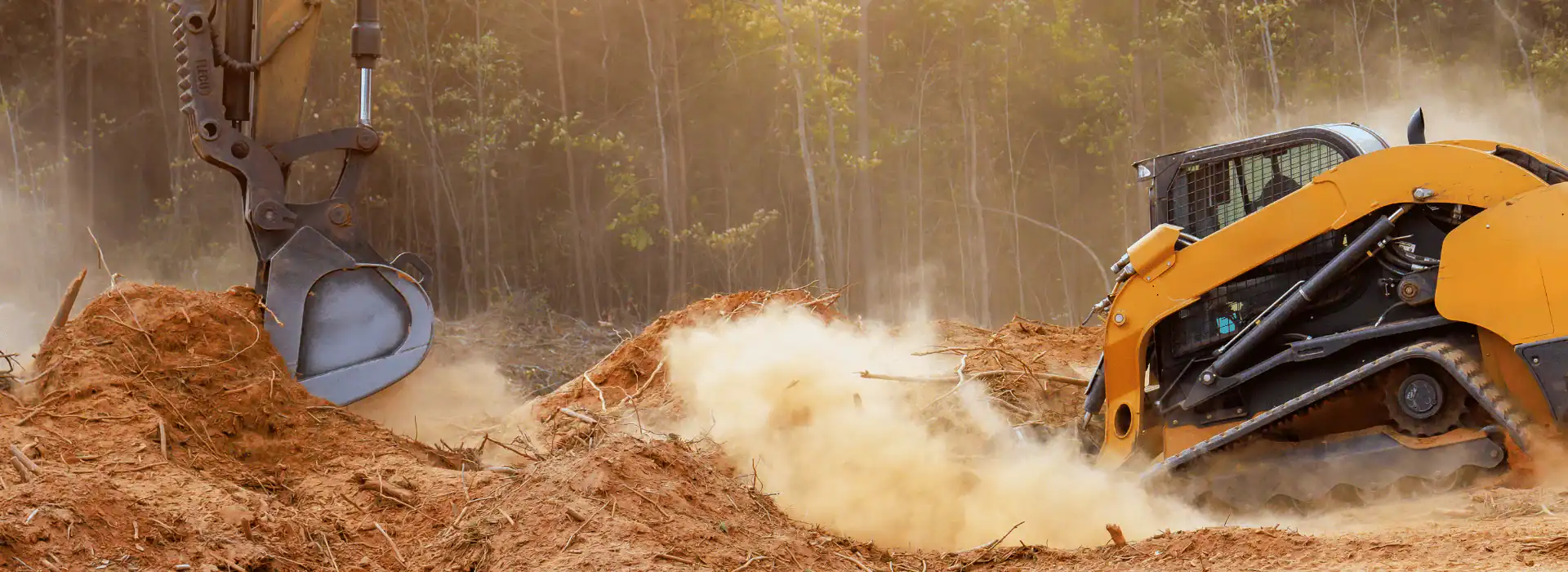
Forestry mulching is a different approach that has grown in popularity for larger parcels and properties with dense brush or invasive vegetation. A single machine grinds everything in place, trees, shrubs, and brush, and returns it to the soil as mulch. It is faster on the right property, produces less disturbance to the topsoil, and eliminates the need to haul debris off-site. For properties where soil preservation matters, particularly in areas with sandy coastal soils prone to erosion, it can be a genuinely better outcome, not just a cost-saving shortcut.
Then there is the question of what happens after the clearing itself. Grading, reshaping the surface of the land to establish proper slope and drainage patterns, is where many contractors stop short. They clear the vegetation and consider the job done. But a cleared property that is not graded correctly will pool water, erode, and create problems for whatever comes next, if that is a foundation, a driveway, a lawn, or a drainage system. Skipping this step is one of the most common reasons homeowners end up calling a second contractor to fix what the first one left behind.
We assess your site before quoting, understand what the land needs to be genuinely usable afterward, and give you a scope of work that covers the full job, not just the visible part.
Yes, and this is one of the most underappreciated parts of the whole process. Vegetation plays a real role in how water moves across a property. Tree root systems absorb water. Ground cover slows runoff. Dense brush acts as a natural buffer. When you remove all of that without a plan for what replaces it, you change the hydrology of the site in ways that can cause serious problems.
This is especially relevant in Suffolk County, where soil conditions vary significantly across the region. Sandy coastal soils, common in South Shore communities near Great South Bay and along the barrier beaches, drain quickly but erode easily once vegetation is removed.
Clay-heavy soils found further inland hold water and can turn a cleared lot into a muddy, unusable surface after any significant rain. In low-lying areas with shallow water tables, standing water after clearing is not just inconvenient; it can affect foundation conditions, saturate soils meant for construction, and back up into basements.
We do not just remove vegetation and grade the surface flat. We think about where water is coming from, where it needs to go, and if the grading we establish will send it there. In many cases, a clearing project naturally leads to a conversation about drainage solutions, surface grading adjustments, dry wells, or a french drain system installed along the perimeter or at the low point of your property. These are not upsells. They are often the difference between a cleared property that works and one that creates new headaches.
If your property has been flooding, pooling water after rain, or sending water toward your foundation, land clearing alone will not solve that. The grading and drainage work that happens alongside clearing is what addresses the root cause. Getting both done together, by the same crew, with a single plan, is almost always more efficient and more effective than treating them as separate projects.
Want live answers?
Connect with a Gold Coast Landworks expert for fast, friendly support.
Suffolk County is not a generic market for land clearing. The combination of local soil conditions, wetland coverage, regulatory requirements, and specific vegetation problems makes this a place where local knowledge is not a nice-to-have; it is essential.
A contractor who clears land in other parts of the country and sets up shop on Long Island will run into compliance issues, site conditions, and vegetation challenges they were not expecting. The homeowners who hire them often find out the hard way. Understanding what makes Suffolk County distinct is the first step toward making a smarter hiring decision.
This is one of the most common questions homeowners ask, and one of the most important ones to get right before any equipment shows up on your property.
In Nassau and Suffolk County, land clearing projects that involve disturbance of natural areas greater than five acres require permits and environmental impact assessments. For smaller residential projects, permit requirements are typically handled at the town level, and they vary depending on the municipality; what is required in Brookhaven is not necessarily the same as what Huntington or Smithtown requires.
The more significant compliance issue for many Suffolk County properties is proximity to wetlands. New York State’s Department of Environmental Conservation regulates any activity within 100 feet of a regulated wetland, and Suffolk County has extensive wetland coverage, from tidal wetlands along the South Shore and bay communities to freshwater wetlands and vernal pools scattered throughout inland areas. If your property is near any of these areas, a DEC review may be required before clearing begins. Proceeding without it can result in fines, mandatory restoration, and stop-work orders that freeze your entire project.
There is also the requirement that NY811 be called before any excavation or ground disturbance. This is not optional, and it is not just a formality; it is how utility lines get marked so they do not get hit. We handle this step before starting work on your property.
Navigating all of this on your own is genuinely difficult. The permit process, the DEC review timeline, and the town-by-town variation in requirements add real complexity to what might seem like a straightforward project. We handle these steps as part of our engagement, which removes a significant burden from you and reduces the risk of a costly compliance mistake.
If you have got bamboo on your property, you already know it is a problem. If you have been ignoring it, it is almost certainly gotten worse. Bamboo spreads through an underground root system called rhizomes, and it can advance up to ten to fifteen feet per year under the right conditions. What started as a decorative planting along a fence line in the 1990s has, on many Long Island properties, turned into a sprawling, dense thicket that has overtaken gardens, pushed through fences, and crossed property lines into neighboring yards.
Bamboo removal is a specialized service, and this is one area where a standard land clearing approach can make things worse. If bamboo is cut down or run through a forestry mulcher without properly addressing the root system, you fragment the rhizomes and can spread the infestation rather than contain it. Effective bamboo removal requires excavating the root mass, removing rhizome fragments carefully, and often treating the area to prevent regrowth. It is labor-intensive, it takes time, and it is not something every contractor is equipped to handle correctly.
Japanese knotweed is another invasive species that has become widespread in Suffolk County, particularly along roadsides, stream corridors, and disturbed areas. Like bamboo, it spreads aggressively through root fragments and requires a targeted removal strategy rather than a simple clearing pass.
If your property has either of these, or other invasive vegetation, ask directly how we plan to handle it before you sign anything. The answer will tell you a lot about if we have dealt with this before or if we are going to treat it like any other brush clearing job and hand you a problem that is harder to solve than the one you started with.
We address invasive species as part of the overall site assessment, not as an afterthought.
The best land clearing contractor for your property is the one who understands what the site needs to be usable when the work is done, not just what needs to come down. That means grading, drainage, debris handling, permit compliance, and a clear scope of work that spells out exactly what is included.
In Suffolk County, it also means someone who knows the local regulatory environment, understands how soil conditions and wetland proximity affect the project, and can handle the full range of what your property might need, from the initial clearing through drainage solutions and beyond.
If you are ready to stop looking at that overgrown corner of your property and start figuring out what it could become, we are here to walk through it with you. Contact us for a site assessment and a clear, honest scope of work.
Summary:


Article details: