
Most landscaping fails because the real problem is underground. Here is what Suffolk County homeowners need to know before they spend a dollar on curb appeal.
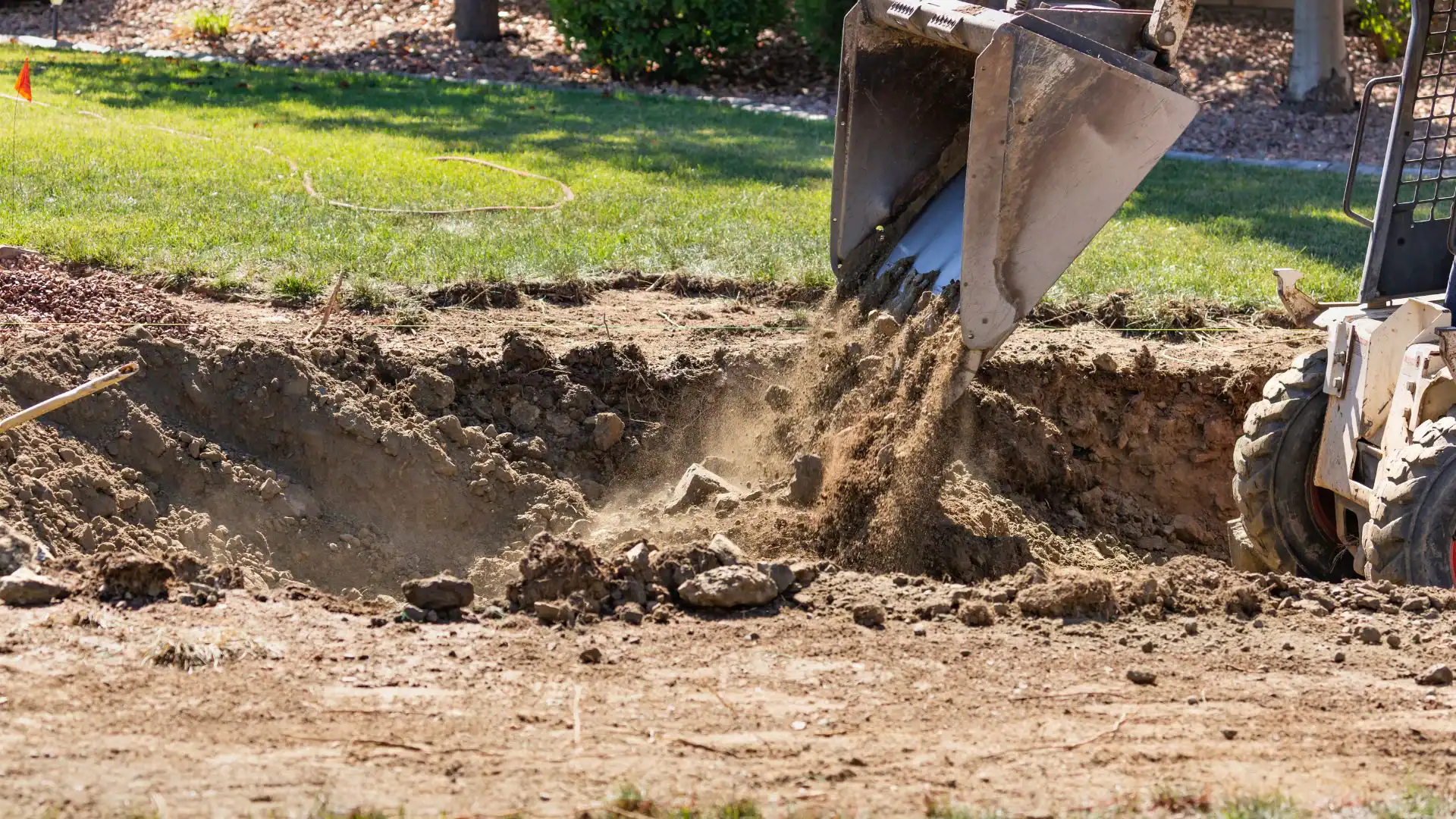
If your yard looks rough after a hard rain, soggy patches, standing water, dead grass where there used to be healthy lawn, you are not alone. It is one of the most common complaints we hear from homeowners across Suffolk County, NY, from Babylon to Smithtown to Riverhead. And nine times out of ten, the problem is not the landscaping itself. It is what is happening underneath it.
We will walk you through what makes landscaping last, why drainage matters more than most people realize, and what a full-service approach looks like when it is done right. If you are tired of putting money into a yard that just will not cooperate, this post is for you.
Suffolk County sits on a glacial outwash plain, which sounds like a geography lesson but has very real consequences for your yard. Depending on where you live, your soil might be sandy and fast-draining, dense with clay that holds water like a sponge, or some layered combination of both. That variation, from the North Shore communities to the South Shore and out toward the East End, means there is no single landscaping fix that works everywhere.
When water has nowhere to go, it pools. When it pools repeatedly in the same spots, it suffocates grass roots, creates the perfect conditions for mold and fungal growth, and slowly works its way toward your foundation. Adding more topsoil or fresh mulch on top of that problem does not fix it. It just raises the grade and often pushes water closer to your house.

The short answer is that water is going somewhere it should not, and the reasons vary more than most people expect. In coastal communities like Bay Shore, Islip, and Amityville, high water tables are a constant factor. The ground is already saturated for much of the year, so even a moderate rainstorm can overwhelm a yard that looks perfectly fine in dry weather.
Farther inland, toward Hauppauge, Commack, or Ronkonkoma, the issue is more often clay-heavy soil that simply does not drain fast enough to keep up with rainfall. Then there is grading, the slope and contour of your land. A yard that pitches toward the house, or that has low spots created by years of settling, will collect water in predictable places every single time it rains. This is not a landscaping problem. It is a grading and drainage problem that happens to show up in your landscaping.
Long Island’s weather does not help. Nor’easters drop significant rain in short windows. Summer thunderstorms can dump two or three inches in an afternoon. When you factor in the aging drainage infrastructure on properties built in the 1960s and 70s, which describes the majority of homes in Suffolk County, you start to understand why so many yards struggle to keep up.
The fix depends entirely on the cause. Sometimes it is a French drain, a perforated pipe buried in a gravel trench that redirects water away from problem areas before it pools. Sometimes it is regrading the yard to correct the slope. Sometimes it is a combination of both, along with clearing out overgrown areas that are blocking natural drainage paths. The important thing is diagnosing what is happening before spending money on a solution.
A lot of homeowners treat a wet basement and a soggy yard as two separate problems that need two separate contractors. In most cases, they are the same problem showing up in two different places.
When water pools against your foundation, if because of poor grading, clay soil, or an overwhelmed drainage system, it creates what is called hydrostatic pressure. That pressure pushes against your foundation walls and eventually finds a way in. The basement gets damp.
Then it gets wet. Then you are dealing with mold, damaged flooring, and a musty smell that does not go away no matter how many times you run a dehumidifier.
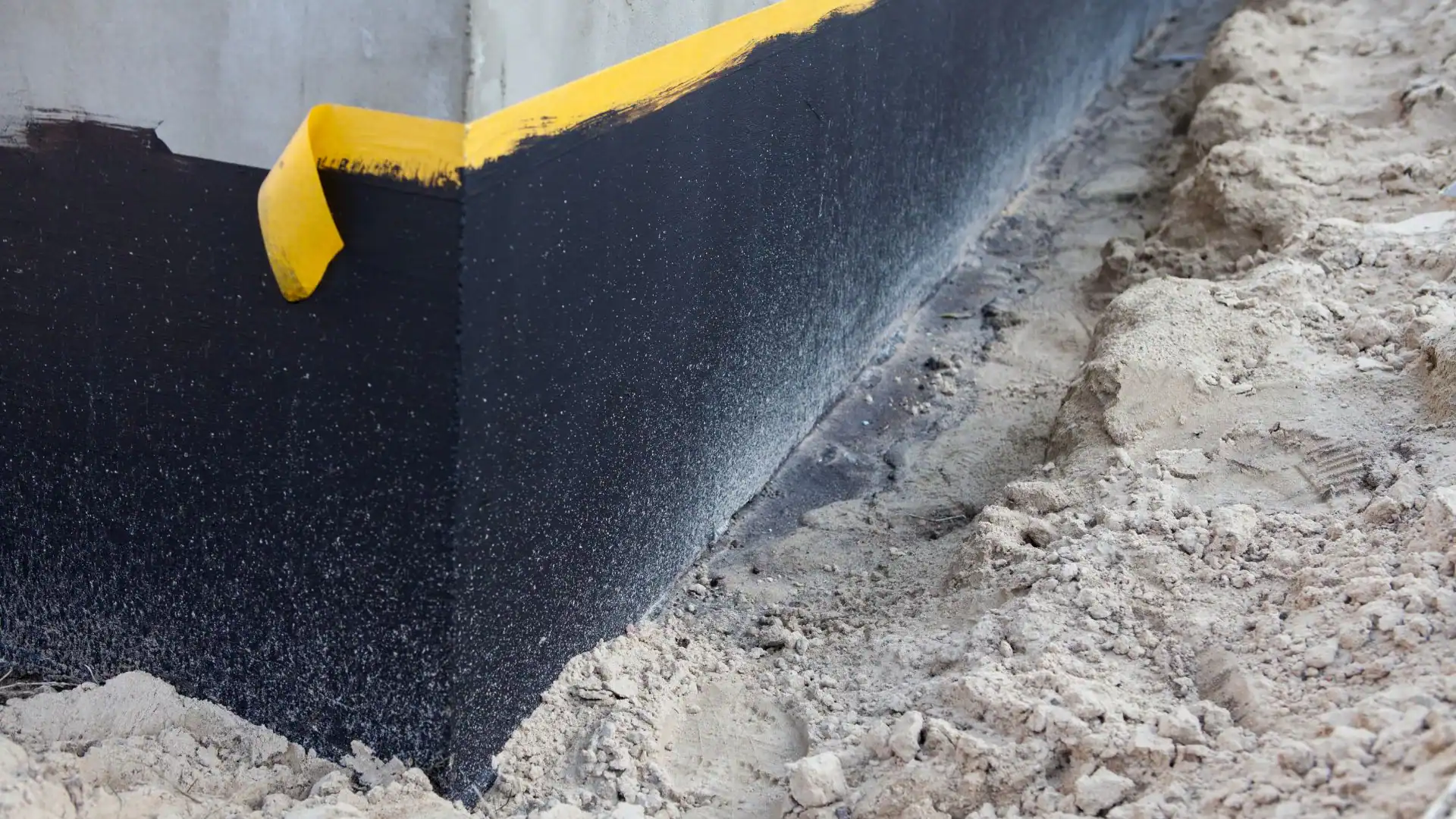
Basement waterproofing addresses the symptoms inside the house. But if the yard drainage issue is not resolved at the same time, you are fighting a losing battle. Water will keep finding its way in because the source of the pressure has not changed. The smarter approach, and the one that holds up long-term, is to address both together. Fix the drainage in the yard, correct the grading if needed, and then waterproof the basement from the outside in, so the system works as a whole rather than as a series of patches.
This is especially relevant for older homes in Suffolk County, NY. A house built in 1970 was designed with the drainage infrastructure of that era. Fifty-plus years of soil settlement, tree root growth, and aging pipes means that infrastructure often needs to be evaluated and updated, not just patched. We see this regularly in neighborhoods across the county, from Port Jefferson to Patchogue to East Hampton, and the pattern is consistent: the homeowners who address the underlying drainage problem first end up with results that last.
Want live answers?
Connect with a Gold Coast Landworks expert for fast, friendly support.
Most people picture landscaping as the finishing layer, the plants, the mulch, the clean edges along the driveway. And that is part of it. But professional landscaping services, done properly, start much earlier in the process.
Before anything goes in the ground, the site needs to be ready. That might mean clearing overgrown brush or trees that have taken over a section of the yard. It might mean excavating and regrading to correct drainage problems. It might mean installing a French drain system to manage water before it becomes a recurring issue. Only after that groundwork is done does the visible landscaping make sense, because now it has a foundation that will support it.
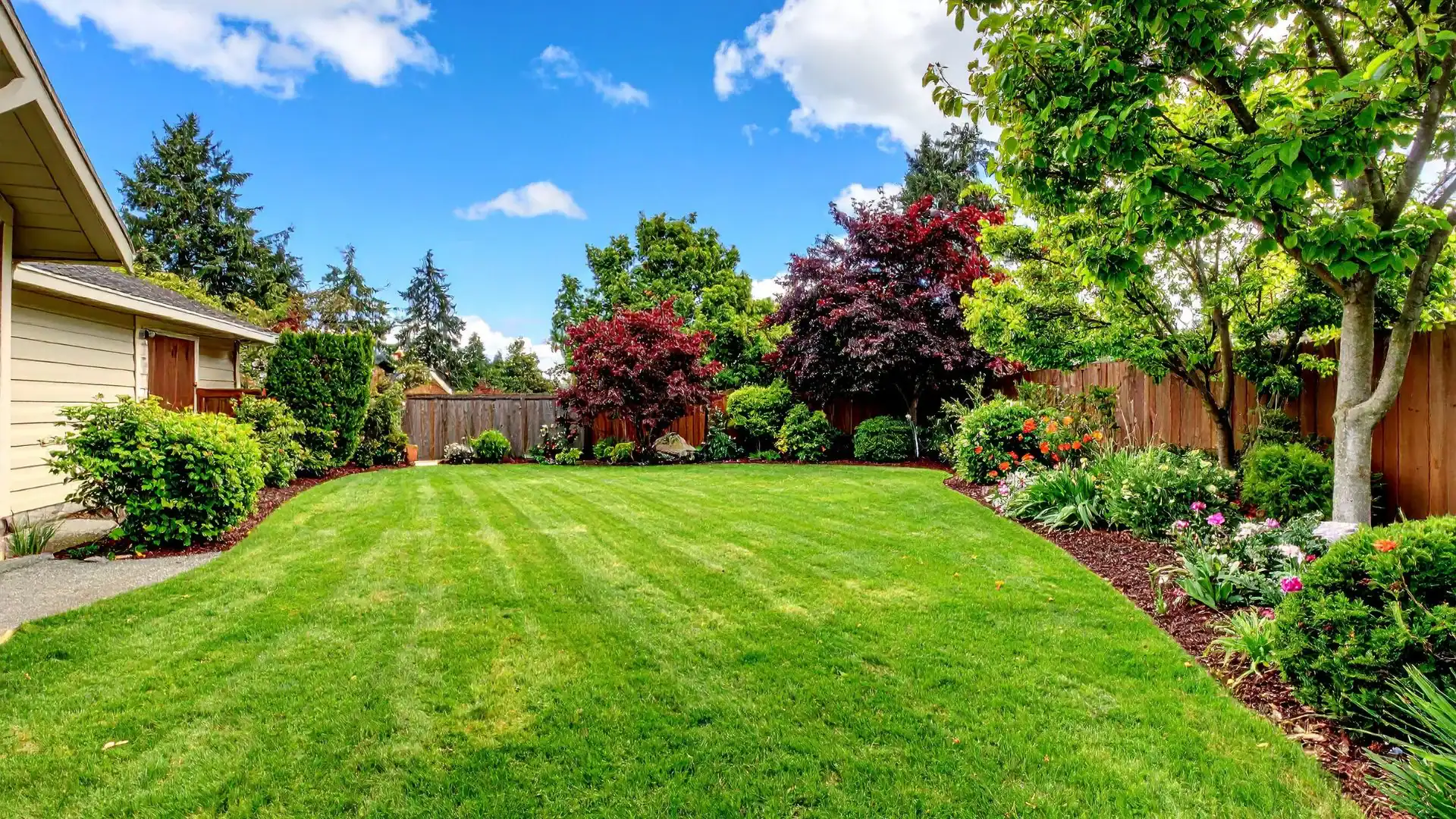
Land clearing is necessary when a section of the property has become too overgrown to work with: dense brush, invasive shrubs, trees that have grown in the wrong places, or debris that has accumulated over years of neglect. Clearing that area properly, down to the root level, is what allows you to use the space. You cannot grade, drain, or plant into a tangle of root systems and old stumps. Skipping this step and trying to landscape over it creates problems later.
Excavation becomes part of the conversation when the existing grade of the land is working against you. If your yard slopes toward the house, water is going to follow that slope every time it rains. Correcting that requires moving earth, sometimes a modest amount, sometimes significantly more depending on the property. It is not dramatic or destructive when it is done by an experienced crew, but it does need to happen before anything else can be installed correctly.
When land clearing, excavation, drainage, and landscaping are handled by the same team, the sequencing is automatic. There is no coordination gap between the excavation crew finishing and the landscaping crew starting. No one is working on assumptions about what the other contractor did or did not do. The whole project moves in order, with one point of accountability from start to finish.
For homeowners in Suffolk County, NY who are planning a significant property improvement, if that is a full backyard overhaul, a new construction site prep, or a long-neglected area they are finally ready to address, this integrated approach is what separates a project that holds up from one that needs to be redone in two years.
One of the questions we hear most is if homeowners need a permit for landscaping or land clearing work in Suffolk County, NY. The answer depends on the scope and location of the project. Routine landscaping, planting, mulching, lawn care, generally does not require a permit.
But excavation, significant grading changes, and work near wetlands or coastal areas can trigger permit requirements from the county or the New York State Department of Environmental Conservation.
Properties near Long Island Sound, the Great South Bay, or any designated wetland buffer zone need particular attention here. Working with a contractor who knows the local regulatory environment is not just convenient, it protects you from fines and project delays. We are familiar with Suffolk County’s specific requirements and handle the permitting process as part of our service.
Another common question is about timing. When is the best time to start a landscaping project in Suffolk County, NY? Spring is the busiest season for a reason: the ground has thawed, planting conditions are ideal, and drainage problems from winter are fresh in everyone’s mind.
But spring also means waitlists. If you are planning a major project, fall is often a smarter window to book and plan, so the work can begin as soon as conditions allow in the spring. Drainage and excavation work can also happen in late fall when the ground is not frozen, which is something a lot of homeowners do not realize.
People also ask how to know if they are getting a fair deal when comparing contractor quotes. The most useful thing to look for is not the lowest number, it is the most detailed scope of work.
A quote that tells you exactly what will be done, in what order, with what materials, is worth more than a vague estimate that is a few hundred dollars cheaper. In this industry, vague bids almost always lead to surprises, and surprises almost always cost more than the difference you thought you were saving. Ask what is included, what is not, and what happens if something unexpected comes up once the work begins.
Good landscaping is not just about how your yard looks on a sunny afternoon. It is about making sure the work lasts, that the drainage holds up through a nor’easter, that the plantings do not drown in the first wet spring, that your basement stays dry when the water table rises. Getting there means starting from the ground up, not from the surface down.
If you have been dealing with standing water, failed landscaping, or a yard that just will not cooperate no matter what you try, the underlying problem is solvable. It just needs to be diagnosed correctly first.
We handle every layer of this, land clearing, excavation, drainage, French drain installation, basement waterproofing, and landscaping services, so you are not piecing together a solution from three different contractors. Reach out to us and let us take a look at what is going on with your property.
Summary:


Article details: