Land clearing on Long Island involves more than cutting trees. Here's what property owners need to know before the first piece of equipment arrives.

You’ve got a property that needs clearing. Maybe it’s an overgrown lot you’ve been putting off. Maybe you’re finally moving forward on a new build. Maybe a storm took down a dozen trees and left the site looking like a different property entirely. Whatever brought you here, you’re probably realizing that land clearing on Long Island isn’t as simple as hiring someone with a chainsaw and a pickup truck. The regulations are real, the terrain varies dramatically from Nassau to Suffolk, and the stakes — especially on higher-value properties — are high enough that you want to get this right the first time. Here’s what you actually need to know.
Land clearing gets described a lot of different ways, but at its core it means transforming a property — removing trees, brush, stumps, overgrowth, and debris so that the land is usable for whatever comes next. That might be new construction, a landscaping overhaul, a pool installation, or simply reclaiming a lot that’s been neglected for years.
The full scope typically covers tree clearing and felling, stump grinding, brush and vegetation removal, and hauling all of that material off the site. We don’t just cut things down — we leave the ground clean, level-ready, and genuinely prepared for the next phase of your project. When a clearing job is done right and there are still stumps in the ground and brush piles along the fence line, that’s not land clearing. That’s half a job.
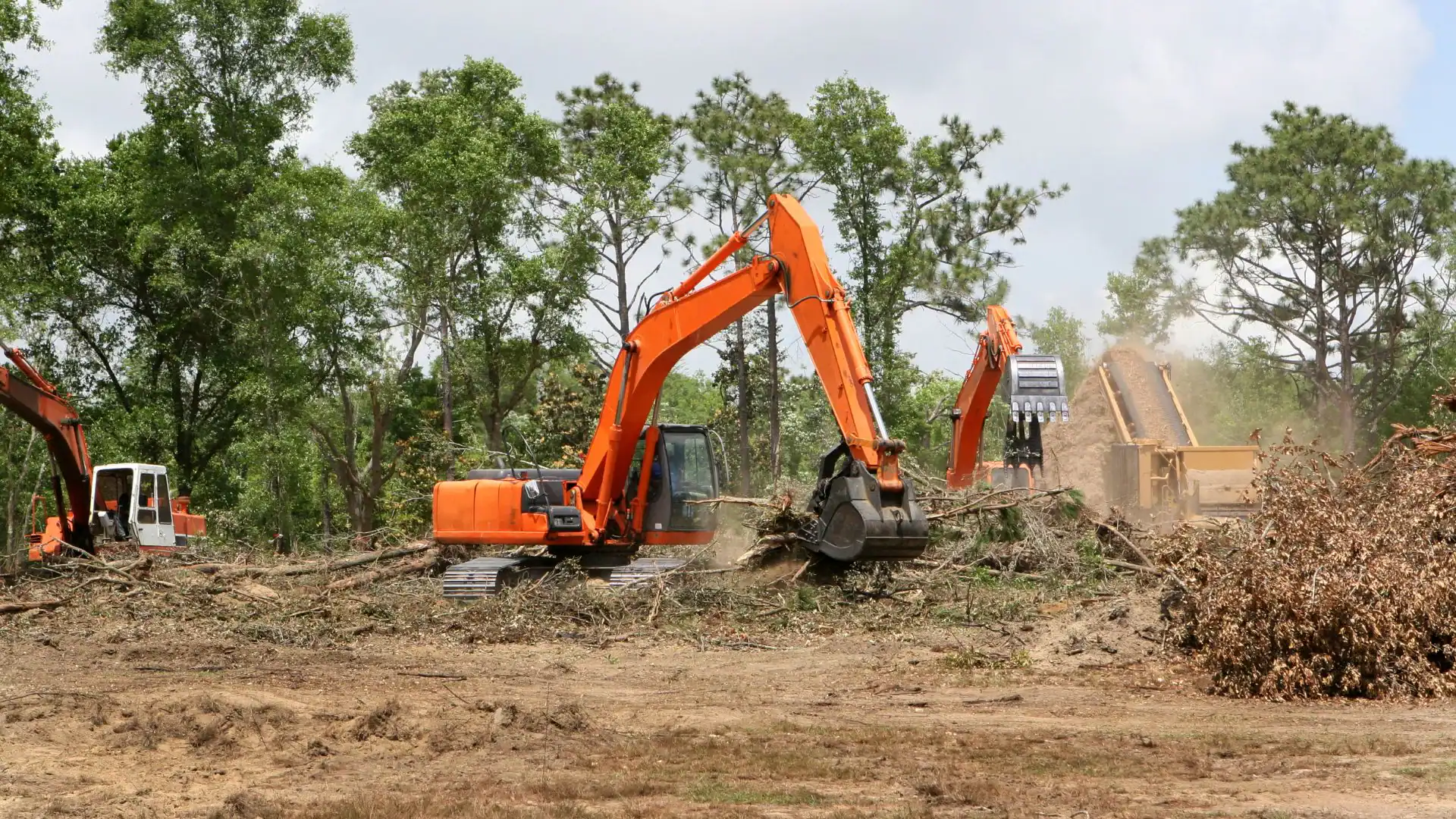
Most property owners have never done this before, and the process feels opaque from the outside. So here’s how it actually works when it’s done properly.
It starts with a site assessment. Before any equipment shows up, we walk the property with you, understand what you’re trying to accomplish, and evaluate what’s there — tree size and density, terrain, proximity to structures or utilities, and whether any wetlands or protected areas are nearby. On Long Island’s North Shore, that last point matters more than most people expect. Properties in Oyster Bay, Huntington, Cold Spring Harbor, and Locust Valley often sit close to tidal or freshwater wetlands, which triggers a whole separate layer of regulatory review before a single tree comes down.
From there, the scope gets documented in writing. Which trees are coming down. Which ones stay. What happens to the debris. What the site should look like when the work is done. This is where corners get cut — verbal agreements leave too much room for misunderstanding, and on a large clearing project, those misunderstandings get expensive fast.
Then comes permitting. In Nassau County, you need a permit to remove more than 50 square feet of vegetation. In Suffolk County, the threshold is 100 square feet. That sounds like a lot until you realize that a single mature oak takes up more than that on its own. Most meaningful clearing projects on Long Island require permits, and individual towns — Smithtown, Islip, Babylon, and others — often layer their own tree preservation ordinances on top of county requirements. If your property is within 100 feet of a regulated wetland, the New York State Department of Environmental Conservation gets involved too.
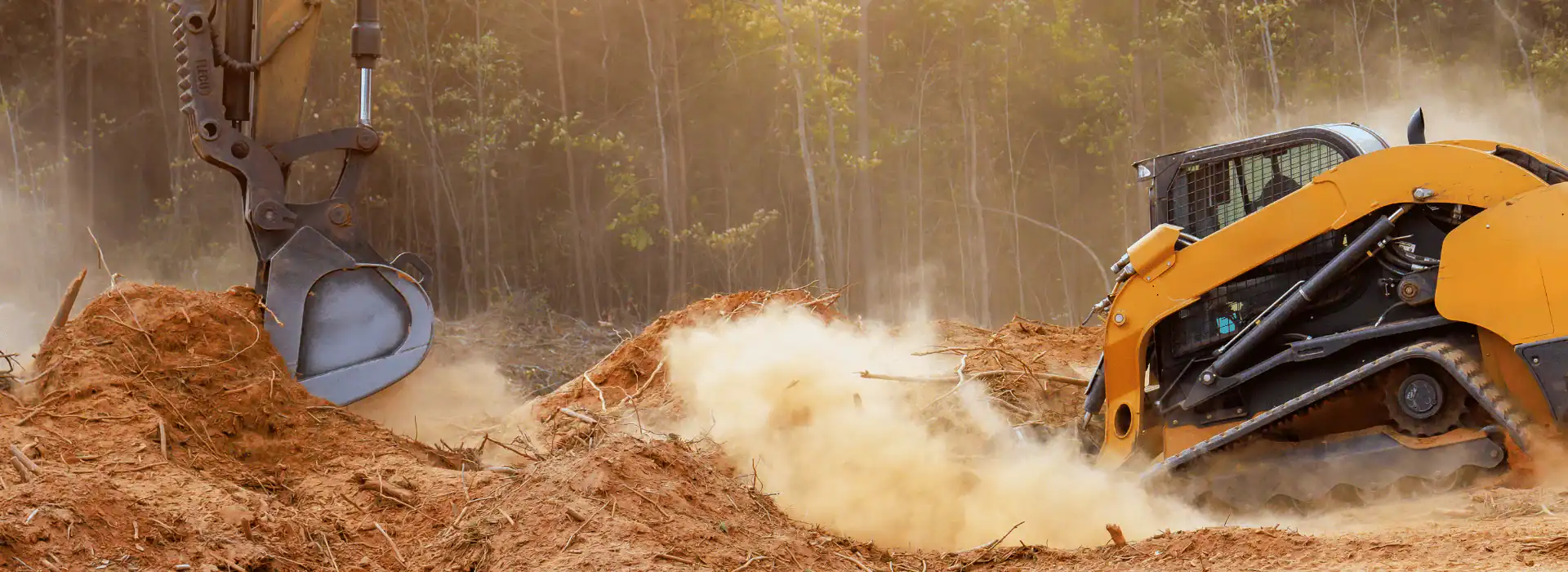
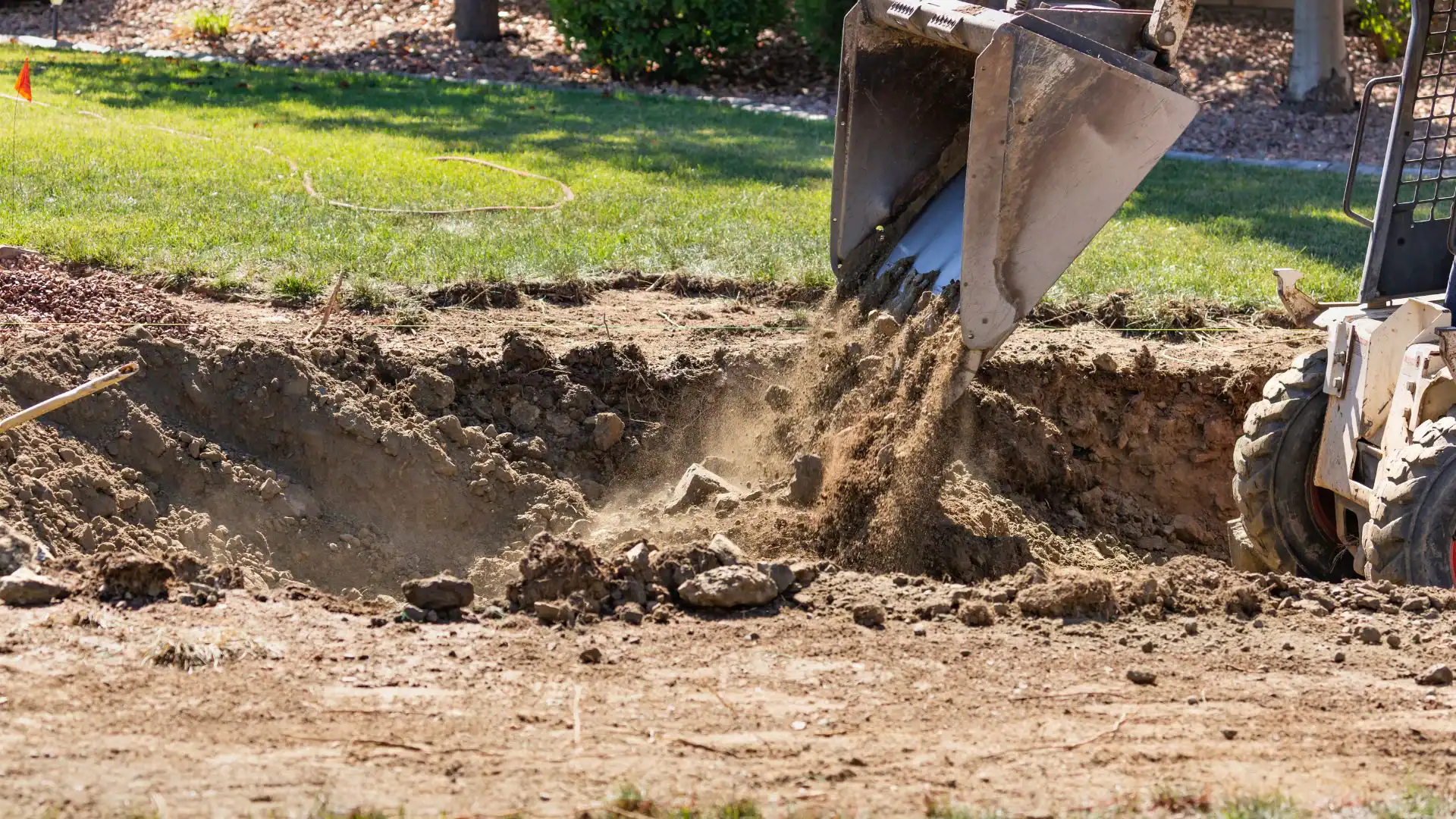
Once permits are in order, the clearing work begins. Equipment varies based on the project — skid steers and forestry mulchers for dense brush and smaller trees, excavators and log loaders for larger timber, stump grinders to finish the job below grade. We move efficiently and methodically, working from the outside in, protecting trees you want to keep, and managing debris as we go rather than letting it pile up.
When the work is done, the site should be clean. Stumps ground down. Brush chipped or hauled. The ground ready for whatever comes next — whether that’s a surveyor, a grading crew, or a landscape designer.
Long Island’s ecology is genuinely unique, and it creates real constraints that don’t exist in most other markets. That’s not a complaint — it’s just something you need to understand before you start.
The NYSDEC’s Article 24 and Article 25 regulations govern freshwater and tidal wetlands respectively. If your property falls within 100 feet of a regulated wetland — which is common across the North Shore, the South Shore barrier islands, and anywhere near Long Island Sound or Great South Bay — you may need a state permit before clearing can begin. Skipping this step doesn’t make the requirement go away. It just means you’re liable for the violation.
In central Suffolk County, the Central Pine Barrens Commission oversees roughly 100,000 acres of protected land. Clearing near this zone requires additional review and, in some cases, mitigation. If your property is in Brookhaven, Riverhead, or parts of Southampton, this may apply to you.
Beyond the regulatory side, there are practical environmental considerations that affect how clearing should be done. Long Island’s soils — especially the clay-heavy areas of Nassau County — are prone to compaction and erosion when disturbed by heavy equipment. We use appropriate equipment for the terrain, implement erosion controls during the project, and can recommend follow-up steps like seeding or mulching to stabilize the ground afterward.
Invasive species are also worth flagging. Japanese knotweed, Oriental bittersweet, multiflora rose, and ailanthus are widespread across Long Island, and they require specific disposal protocols to prevent spreading to adjacent areas during removal. If your property has any of these, we know how to handle them properly — not just cut them back and leave the root systems to resprout.
Want live answers?
Connect with a Gold Coast Landworks expert for fast, friendly support.
Cost is usually the first question, and the honest answer is that it varies — a lot. On Long Island, land clearing consistently runs at the higher end of regional ranges, and for good reason: labor costs are higher, the regulatory compliance work adds time and expense, and the terrain and vegetation on the North Shore require heavier equipment and more skilled operators than a flat, lightly wooded lot elsewhere.
What affects your cost most is the density and size of the vegetation, the total area being cleared, how close the work is to structures or protected areas, and whether stump grinding and full debris removal are included in the scope. We provide written, itemized quotes — not ballpark numbers over the phone — before you commit to anything.
For a standard residential lot — somewhere in the quarter to half-acre range with moderate tree cover — expect one to two days of active clearing work once the crew is on-site. That’s the physical work. The full project timeline, from first call to cleared site, is a different number.
Permit processing in Nassau and Suffolk County can add days to weeks depending on the municipality and the complexity of the application. If NYSDEC review is required, that adds more time. This is why starting the conversation early matters more than most property owners realize. If you’re planning a spring construction start, you don’t want to be calling a clearing contractor in April. The jobs that go smoothly are the ones where the planning started in February.
Larger properties — multi-acre lots, estate parcels, commercial development sites — take proportionally longer. A heavily forested two-acre lot might require three to five days of clearing work. A commercial site preparation project with grading and drainage considerations built in could run several weeks from mobilization to final cleanup.
The time of year also affects both availability and working conditions. Late winter through early spring is the best window for clearing on Long Island. Trees are dormant and leafless, which makes it easier to assess the full scope of the project and safer to fell large timber. Ground conditions are typically firmer, which is better for heavy equipment. And clearing in February or March sets you up for a summer construction or landscaping start — which is exactly where most Long Island project timelines want to land.
Scheduling a project in summer isn’t impossible, but contractor availability tightens considerably during peak season, and dense leaf cover can complicate the assessment process. If you have flexibility, the late winter window is worth planning around.
A few questions come up on almost every project, and they’re worth answering directly.
Do I really need a permit just to clear some trees? On Long Island, almost certainly yes. Nassau County’s permit threshold — 50 square feet of vegetation — is one of the lowest in New York State. Suffolk County’s threshold is 100 square feet. Beyond county requirements, your specific town or village may have its own tree preservation ordinance that’s even more restrictive. Some Gold Coast communities in Nassau County have rules that limit the number and size of trees that can be removed without special approval. The short answer: assume you need a permit, and confirm before anything gets cut.
What happens to all the trees and debris after clearing? This depends on the scope of the project, but on a properly run job, the debris doesn’t become your problem. Trees are typically felled, limbed, and either chipped on-site or hauled away in logs. Stumps are ground down below grade. Brush is chipped or removed. The site you get back should be clean — not a landscape of wood piles and root mounds waiting for a second trip.
Can I just do part of this myself? For light brush and small shrubs, DIY clearing is reasonable. Anything involving mature trees — and Long Island’s North Shore is full of them, red oak, white oak, tulip poplar, hickory, mature hardwoods that have been growing for decades — is a different matter. The safety risk alone makes professional equipment and experience non-negotiable. Add in the permit requirements and the liability exposure from a tree that falls the wrong way, and the case for hiring a qualified contractor gets clear fast.
How do I make sure they don’t take down trees I want to keep? This comes down to the walkthrough and the written scope. Before any work begins, the property should be walked with you present, and the trees being removed should be clearly identified and agreed upon in writing. A contractor who shows up and starts cutting without that conversation isn’t one you want on your property.
What should I look for in a land clearing contractor on Long Island? Licensing matters — both Nassau and Suffolk County require Home Improvement Contractor licenses for this type of work. Current general liability and workers’ compensation insurance are non-negotiable. Beyond that, look for someone who knows the local permit requirements well enough to walk you through them, has the equipment to handle your specific project, provides a written scope and fixed quote, and can point to real completed projects in your area. Long Island’s regulatory environment is specific enough that local experience isn’t just a nice-to-have — it’s the difference between a project that runs smoothly and one that gets stopped mid-job.
Land clearing done right sets up everything that comes after it. Done wrong — or done without the right permits — it creates problems that are expensive and time-consuming to fix. On Long Island, where the regulatory environment is genuinely complex and the properties are genuinely valuable, cutting corners at the clearing stage isn’t worth it.
The most important thing you can do before starting any project is have a real conversation with a contractor who knows this market. Not a ballpark number over the phone — an actual site assessment, a clear scope of work, and a written quote that tells you exactly what’s included.
If you’re planning a clearing project anywhere in Nassau or Suffolk County — whether it’s a residential lot in Huntington, an estate parcel on the North Shore, or a commercial site in Smithtown — we’re ready to take a look and give you a straight answer on what it’s going to take.
Summary:


Article details: